Empty, dust, degrease with mild soap, wipe, rinse, dry, and protect.
We moved into a new apartment last year and the kitchen cupboards told the whole story of everyone who had cooked there before us. Greasy handles, sticky shelves, and that mysterious dark buildup around the edges that no quick wipe would touch. Linda looked at them and said — we are not putting our food in there until those are clean.
So we got to work and figured out how to clean kitchen cupboards properly from top to bottom. The right products, the right order, and the small tricks that make a big difference without scratching the finish or spending hours scrubbing. This guide covers everything we learned so you can get the same results in half the time.
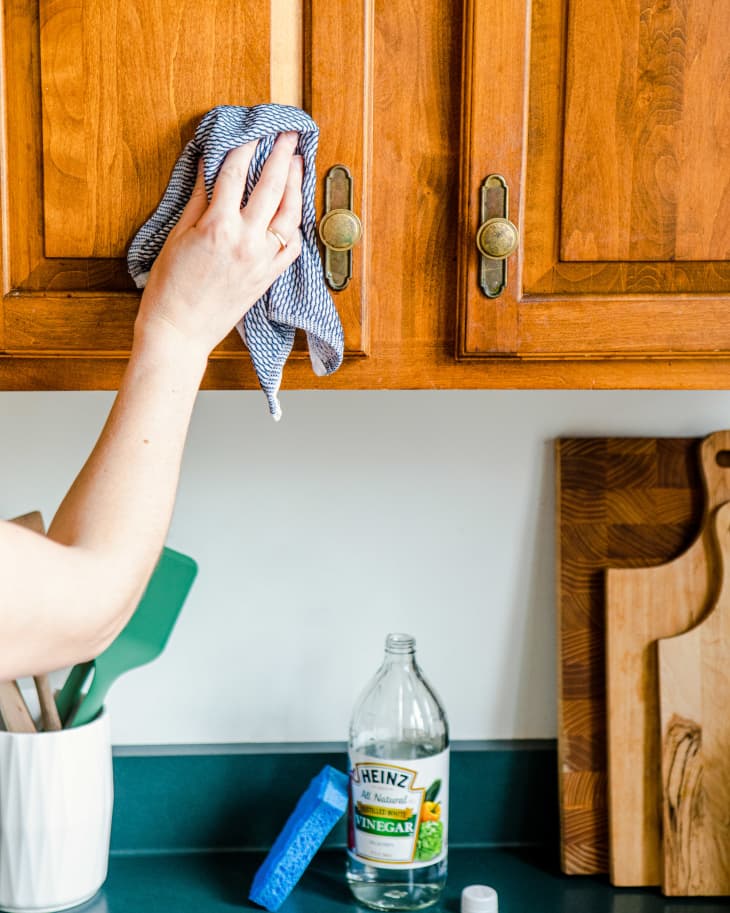
What You Need Before You Start
Gather the right tools so you do not stop mid-clean. Simple kits work best. I prefer gentle cleaners that protect finishes and your hands.
Essentials I use on most jobs:
- Microfiber cloths for dusting, washing, and drying
- Soft brush or old toothbrush for grooves and hinges
- Bucket of warm water plus a small spray bottle
- Mild dish soap for grease and general soil
- White vinegar for odor control on non-stone, non-wax surfaces
- Baking soda for sticky spots and stains
- A melamine sponge for marks on hard, durable finishes
- Food-safe mineral oil or a beeswax-wood balm for solid wood
- Vacuum with a soft brush attachment for crumbs
- Nitrile gloves, step stool, and a drop cloth to protect floors
My quick test rule:
- Test any cleaner on a hidden spot first.
- Check a cabinet maker’s care guide if you have it.
- When in doubt, mild soap and water win.
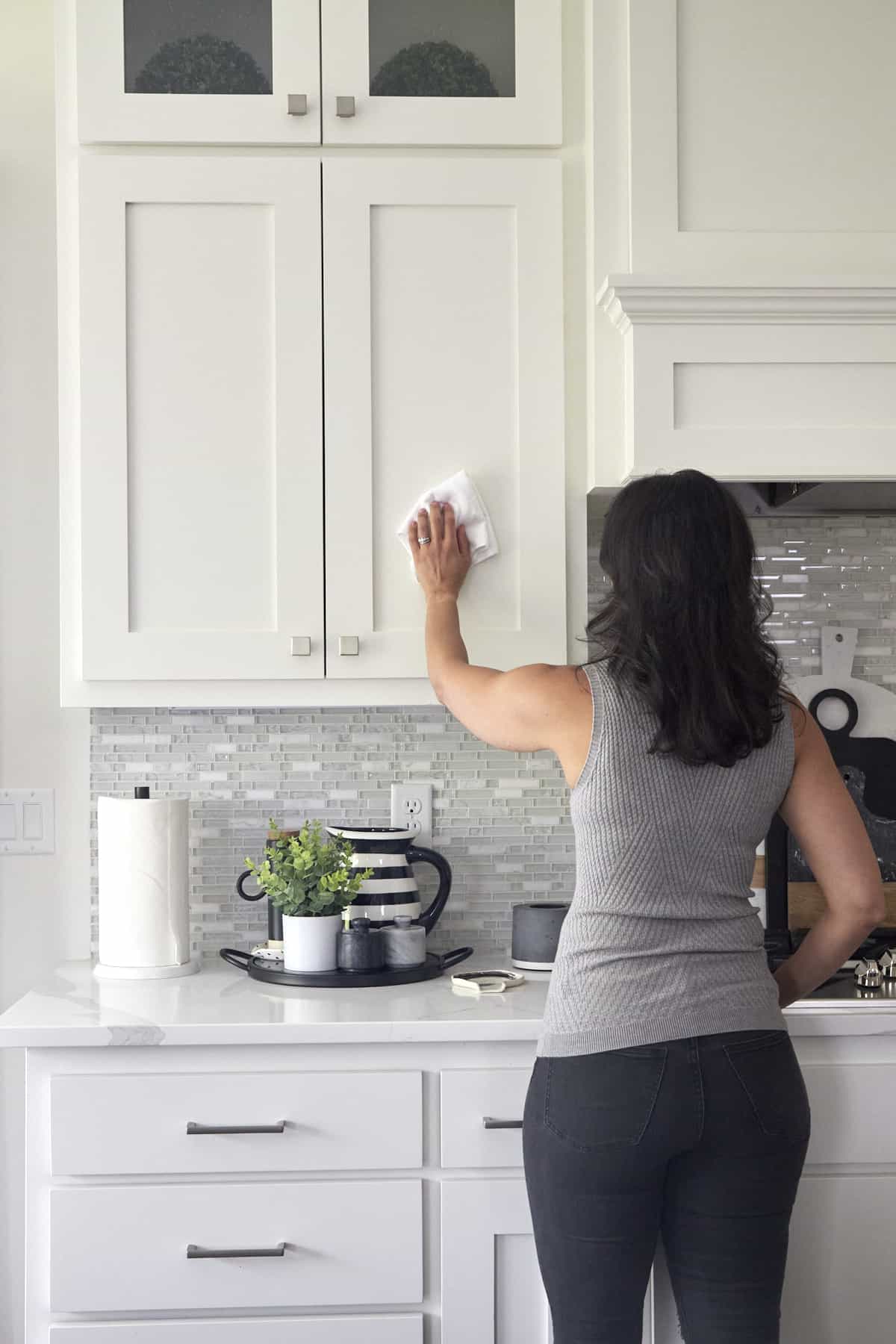
How to Clean Kitchen Cupboards Step by Step
This is the method I use in homes every week. It works for wood, painted, and laminate, with small tweaks.
- Prep the space
- Clear counters and move small appliances.
- Place a drop cloth or towel on the floor.
- Open a window or turn on a fan.
- Empty and sort
- Remove everything from the cupboards.
- Toss expired items and wipe dusty jars before they go back.
- Dry dust and vacuum
- Use a dry microfiber to remove loose dust inside and out.
- Vacuum crumbs from corners and shelf seams.
- Pre-treat grease
- Mix warm water with a few drops of dish soap.
- Spray or wipe greasy spots. Let it sit for 2–3 minutes.
- Wash doors and exteriors
- Dip a cloth in soapy water. Wring well. The cloth should be damp, not wet.
- Wipe doors, frames, and edges with the grain if wood.
- For crevices, use a soft brush with the same soap mix.
- Clean hardware and hinges
- Remove knobs and pulls if they are grimy. Soak in warm soapy water.
- Scrub with a soft brush. Rinse and dry well.
- Wipe hinges with a damp cloth. Dry right away.
- Wash interiors
- Wipe shelves, sides, and undersides with the same soapy mix.
- Rinse cloth often and keep water clean.
- Rinse and dry
- Use a new cloth with clean water to remove soap film.
- Dry with a fresh microfiber. Do not leave moisture on wood or seams.
- Address stubborn spots
- Sticky labels or tape: dab cooking oil, wait 5 minutes, then wipe.
- Grease film: use a baking soda paste on a cloth. Rinse and dry.
- Finish and reassemble
- For wood, apply a thin coat of food-safe mineral oil or wood balm. Buff dry.
- Reattach clean hardware. Return items to cupboards in zones you can keep.
Common mistakes to avoid:
- Do not flood doors with water. Moisture can swell edges.
- Do not use strong ammonia or abrasive powders on most finishes.
- Do not mix chemicals. Stay with one cleaner at a time.
If you want a fast refresher on how to clean kitchen cupboards, do steps 3, 5, 8, and 10. It takes under an hour for a small kitchen.
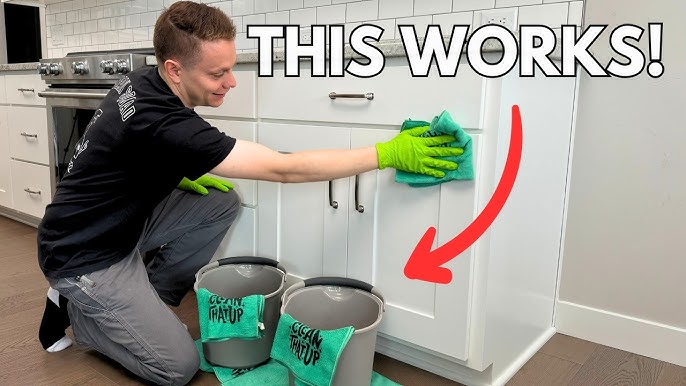
Methods by Material: What Works and What to Skip
Knowing your finish protects your investment. Here is how I tailor cleaners by surface.
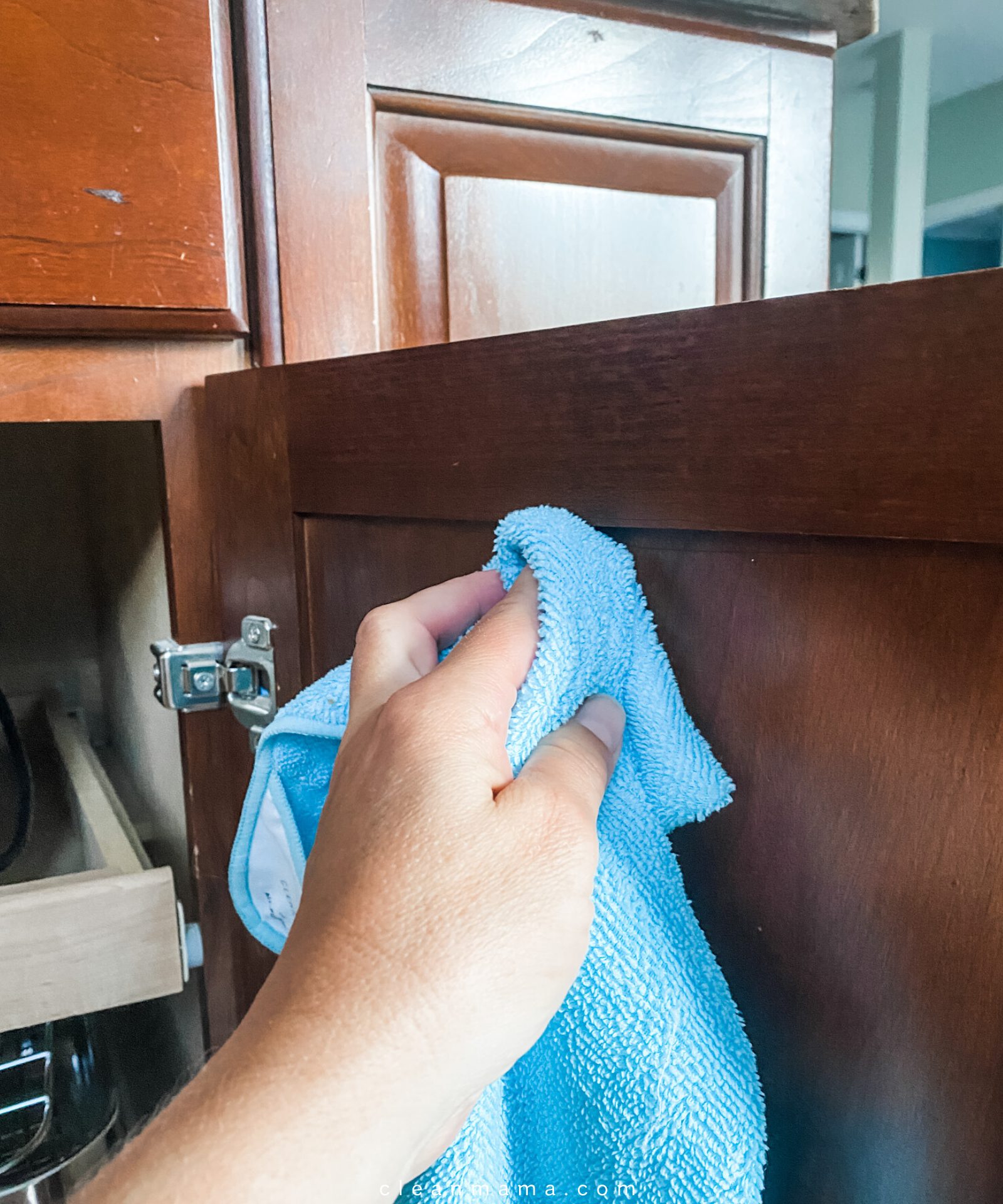
Solid wood or wood veneer
- Use mild soap and water. Wipe with the grain.
- Dry right away. Keep water to a minimum.
- Every few months, condition with a beeswax or mineral oil balm.
- Avoid pure vinegar, steam, and high-alkaline degreasers that can dull finish.
Painted cabinets
- Soap and water handle most soil.
- For marks, try a melamine sponge with a light touch.
- Avoid harsh scrubbing on edges where paint is thin.
Laminate and thermofoil
- Very durable and easy to wipe.
- Soap and water or a 50/50 vinegar-water mix works well.
- Avoid heat and steam on edges to prevent lift.
Stained and lacquered finishes
- Stick to soap and water. Buff dry.
- Skip vinegar and strong degreasers to protect sheen.
Glass fronts
- Clean the frame first.
- Use glass cleaner or vinegar-water on the panes. Wipe dry with a lint-free cloth.
When unsure how to clean kitchen cupboards made of mixed materials, use the gentlest method on the most delicate part and scale up only if needed.

How to Remove Tough Grease and Stains
Grease builds up near stoves and handles. Here is my safe, step-wise method.
Start gentle:
- Warm water plus dish soap breaks most kitchen grease.
- Allow a short dwell time so the soap can work.
Step up with baking soda:
- Sprinkle baking soda on a damp cloth.
- Rub the spot softly in circles. Rinse and dry.
Use a targeted degreaser:
- Choose a kitchen-safe, non-caustic degreaser.
- Spray on cloth, not on the cabinet. Wipe, then rinse and dry.
For old, sticky resin on durable finishes:
- Very lightly use a melamine sponge. Test first and go slow.
- For wood with oil-based finish, a drop of mineral spirits on a cloth can help. Test in a hidden spot and ventilate well. Wipe with soapy water and dry.
Note on safety:
- Never mix ammonia with bleach or chlorine-based products.
- Wear gloves and keep the area ventilated.
This is the section where people search how to clean kitchen cupboards with heavy grease. The answer is patience, dwell time, and the right mild tools.
Odor, Mold, and Pests in Cupboards
Musty smells often come from moisture and trapped crumbs. Fix the cause, then clean.
For odors:
- Wash interiors with warm soapy water and dry well.
- Place a small bowl of baking soda or activated charcoal for a week.
- Keep air moving and reduce humidity.
For small spots of surface mold on non-porous interiors:
- Clean with soap and water first.
- Apply 3% hydrogen peroxide on the spot. Let it sit 10 minutes. Wipe and dry.
- Replace any damp shelf liners and fix leaks.
For pantry pests:
- Empty the cupboard. Discard infested food in sealed bags.
- Vacuum seams. Wipe with soapy water. Dry fully.
- Store dry goods in airtight containers going forward.
People look up how to clean kitchen cupboards after pantry moths. The key is empty, clean, seal, and monitor for two weeks.
Organize and Protect After Cleaning
A clean cupboard is easier to keep tidy when items have a home.
Smart protection steps:
- Add washable shelf liners to catch crumbs and spills.
- Use clear bins for baking goods and snack zones.
- Place lazy Susans in corners or for oils and sauces.
- Label containers and shelves to guide family use.
Reassembly tips from my client work:
- Heavy items low. Daily items at eye level.
- Group by task: coffee zone, baking zone, lunch zone.
- Keep a “back stock” bin so extras do not spread.
When I teach how to clean kitchen cupboards during move-ins, I set zones first. It prevents clutter from returning.
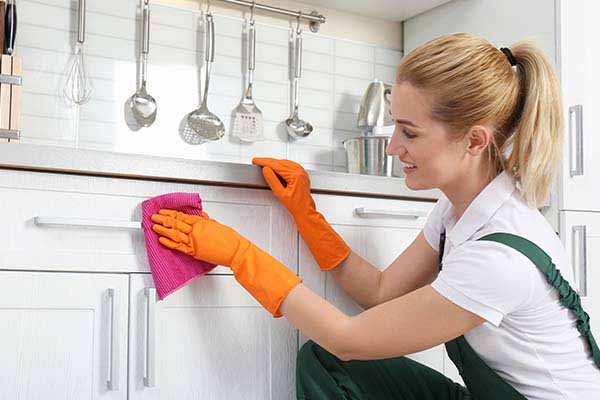
Maintenance Schedule and Quick Routines
Short, steady routines beat rare marathons.
Daily
- Wipe handles and splash zones as you cook.
- Close doors with clean, dry hands.
Weekly
- Quick dust of exteriors with a dry microfiber.
- Spot-clean drips and fingerprints.
Monthly
- Wipe high-touch doors with soapy water, then dry.
- Check for crumbs and leaks inside sink bases.
Seasonal
- Full empty-and-clean session.
- Condition wood fronts. Tighten loose screws. Replace worn bumpers.
If you forget steps on how to clean kitchen cupboards, place a small reminder card inside a door. Simple prompts keep habits going.
Safety, Eco-Friendly, and Cost-Saving Tips
Cleaners do not need to be harsh to be effective.
What I rely on most:
- Mild dish soap is a powerful, safe degreaser for everyday use.
- Vinegar-water is great for laminate and glass, not for waxed wood.
- Baking soda adds gentle abrasion without scratching most surfaces.
Safety and trust notes:
- Ventilate, wear gloves, and keep products labeled.
- Never mix chemicals. Use one product, rinse, then switch if needed.
- Follow cabinet maker guidance for finish care and warranty terms.
Budget wins:
- Microfiber cloths last hundreds of washes.
- DIY soap solutions cost pennies per use.
- Preventative wipes save time and money on deep rescues later.
Remember, the safest version of how to clean kitchen cupboards is the one you can repeat often with no damage.
Frequently Asked Questions of how to clean kitchen cupboards
Can I use vinegar on wood cabinets?
Use caution. Vinegar can dull certain wood finishes over time. Mild soap and water are safer for wood, then dry and condition.
What is the best way to clean greasy kitchen cupboards?
Start with warm water and a few drops of dish soap. Let it dwell, wipe, rinse, and dry. Use baking soda or a gentle degreaser only if needed.
Are magic erasers safe for cabinets?
They are mild abrasives. Test on a hidden area and use a light touch, especially on painted or matte finishes.
How often should I deep clean cupboards?
Seasonally is ideal for most homes. Do quick weekly wipe-downs to control buildup and extend time between deep cleans.
How do I clean cabinet hardware without removing it?
Spray a cloth with soapy water and wipe around the hardware. For heavy grime, remove, soak in soapy water, scrub, rinse, and dry.
What should I avoid when cleaning cabinets?
Avoid soaking with water, strong caustic cleaners, and mixing chemicals. Skip harsh abrasives that can scratch or strip finishes.
Conclusion
Clean cupboards make cooking calmer and faster. Empty, dust, wash with mild soap, rinse, dry, and protect. Choose a light, regular routine so grease never wins. Now that you know how to clean kitchen cupboards with confidence, pick one section today and try it on a single cabinet. Share your results or questions, and subscribe for more simple, effective home care guides.