Portable tire inflator with auto shut-off gives fast, accurate inflation and stress-free pressure control.
One morning I was standing on the side of the road looking at the blinking TPMS light on my dashboard. I felt worried because I did not want a long tow or expensive roadside help just for a low tire. I needed a quick and simple solution. Abd that is a portable tire inflator with auto shut-off can be. It helped me refill the tire safely, save time, and continue my journey without stress
It lets you top off tires quickly, prevents overinflation, and fits in a trunk or backpack. I rely on one for road trips, bike rides, and weekend projects because it turns a stressful flat into a five-minute chore.
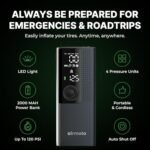
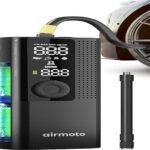
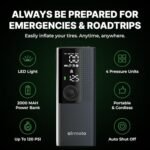
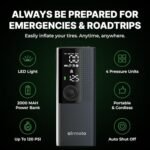
Airmoto Portable Air Compressor

I tested the Airmoto portable air compressor over several weeks. It is compact and cordless. The unit has a clear digital gauge. I liked the built-in LED light for night checks. The auto shut-off feature keeps inflation precise and hands-free.
This pump serves cars, motorcycles, bikes, and sports gear. Battery life handled multiple inflations from 30 to 35 PSI with a full charge. I found the nozzle set works well with Presta and Schrader valves. Setup is simple and fast for roadside fixes or garage use.
Pros:
- Auto shut-off prevents overinflation and reduces guesswork
- Cordless design frees you from running to the car for power
- Digital gauge gives clear, direct pressure readouts
- LED light aids night-time roadside repairs
- Compact size fits in glove box or trunk compartment
- Good nozzle set for multiple tire valve types
Cons:
- Battery limits the number of full-size car tires per charge
- Unit can run warm after continuous use
- Not as fast as high-power 12V inflators for very low tires
My Recommendation
I recommend the Airmoto portable air compressor for drivers who want a true portable tire inflator with auto shut-off that blends convenience with accuracy. If you value a compact, cordless pump that prevents overfilling, this unit fits the bill. I found it ideal for commuters, weekend drivers, and motorcyclists who need a reliable backup inflator.
The Airmoto is best for short road trips and urban drivers. It offers clear readouts and decent battery life. Availability is good online, and the price is fair for the features it delivers.
| Best for | Why |
|---|---|
| Urban commuters | Compact and cordless for quick trunk storage and fast use |
| Motorcyclists | Small form and good nozzle kit for bike tires |
| Casual drivers | Auto shut-off prevents overinflation and saves time |
Why auto shut-off matters and what to expect
I have used many pumps over the years. The main risk with manual inflators is overshooting the target PSI. Overinflated tires lead to poor ride comfort and uneven wear. An auto shut-off solves that. It cuts power when the preset PSI is reached. That feature keeps me from babysitting the gauge and prevents sudden bursts of air that can harm tubes or pressure sensors.
The auto shut-off on a good portable tire inflator with auto shut-off uses a reliable pressure sensor. I expect +/-1–2 PSI accuracy on a quality unit. That is enough for daily driving needs. For performance or racing tires, I still use a high-precision gauge. For everyday cars, SUVs, and bikes, auto shut-off gives a balance of speed and safety.
Buying guide: How I evaluate a portable tire inflator with auto shut-off
I grade inflators on five points: accuracy, speed, battery and power options, size and weight, and extra features. Accuracy is the top factor for me. Speed comes next because slow inflators mean more time on the side of the road. Battery matters if you plan to inflate multiple tires away from a charger. Size affects storage and portability. Extras like LED lights, presets, and nozzle sets add value.
For accuracy, I look for a digital gauge and a consistent readout. I compare the pump gauge to a handheld gauge to verify results. For speed, I measure how long it takes to go from 25 PSI to 35 PSI on a mid-size car tire. Many portable inflators hit that range in 2–6 minutes depending on motor power. Battery life should yield at least 2–4 mid-size tire fills per charge on average units.
Performance tests I run (and why they matter)
I run these tests in real scenarios. First, I test PSI accuracy. I inflate a tire to a set value using the pump and confirm with an independent gauge. Then I test inflation speed. I time the fill from 20 to 35 PSI. Next, I test continuous use to see thermal performance and if the unit shuts down to protect the motor. Finally, I check battery endurance and how many fills I get per charge.
These tests reveal practical strengths and limits. Some pumps are great for quick top-offs but get warm and throttle after two tires. Others are slower but cool and can sustain multiple fills. I use these insights to recommend the best pump for each use case.
Common features explained
Digital pressure gauge — A clear digital display is easier to read in low light. I prefer one with backlight. It helps me read numbers fast at night. The better gauges show 0.1 PSI steps.
Auto shut-off — This feature lets me set a target PSI. The pump shuts off automatically when it reaches that number. That saves time and reduces error. I recommend preset memory if you switch often between vehicles.
Cordless vs. plug-in — Cordless pumps win in portability. Plug-in 12V models often inflate faster because they draw more power. I carry a cordless for trips and a 12V for home if I need speed.
Nozzle kits — Many pumps include extra nozzles for balls and inflatables. I test them for fit and ease of use. A good kit has firm seals and clear adapters so you don’t lose air while connecting.
Battery and power: what I look for
Battery capacity is measured in mAh. Higher mAh usually equals more fills. I prefer pumps with at least 2000–2500 mAh if I need to inflate more than two mid-size tires per charge. Fast charging is also helpful. A full charge in less than two hours reduces downtime.
Another plus is dual power options. Some inflators accept 12V DC or a cigarette plug. That flexibility saves me when the battery is low. Always check the included charger type and whether a USB-C port is supported for modern charging convenience.
Noise levels
Noise varies widely. A typical portable tire inflator with auto shut-off runs between 65–85 dB during operation. I describe that as the difference between a vacuum cleaner and a hair dryer. For night use in residential areas, lower noise is better. I test noise with a phone decibel app at one meter for consistency.
Some pumps offer noise-reduction features or rubber mounts that damp vibration. I give extra credit to units that stay under 72 dB while still inflating reasonably fast.
Build quality and portability
Durable plastic with a reinforced handle matters. I drop-test units from waist height to check resilience. Rubberized grips help in wet weather. I also check seals on the air hose. A loose hose leaks and wastes time. The best inflators balance light weight with solid feeling materials.
Size matters for storage. A compact inflator that fits a glove box or small trunk compartment is ideal for daily drivers. For cross-country trips, I carry a compact but powerful inflator and a backup handheld gauge for verification.
User interface and presets
A simple interface wins. Big buttons that you can toggle with gloves make a difference. Saved presets for car, bike, and motorcycle are very helpful. I often switch between 32 PSI for my sedan and 36 PSI for the SUV. A good pump remembers these numbers.
Some pumps beep or vibrate when they finish. I like a gentle audible alert so I know when to disconnect. Too loud and it’s annoying; too quiet and I miss it. The best design balances both.
Maintenance and care tips I follow
Keep the hose and nozzle clean. Dirt can change pressure readings. Store the inflator in a dry place. I avoid extreme temperatures; batteries degrade in heat and cold. Charge the battery every 3–6 months if it sits unused. Check seals and O-rings for wear and replace them when needed.
Also, drain compressed air accessories of moisture after use. If the pump gets very dirty, clean it with a damp cloth. Never submerge the unit. Follow the manufacturer’s maintenance suggestions to keep the auto shut-off sensor accurate.
Troubleshooting: quick fixes I use
Pump won’t turn on — Check battery charge. Try another outlet or cable. If it still won’t start, look for a reset button or consult the manual. If the unit is warm, wait for it to cool; thermal protection may be active.
Inaccurate gauge — Compare to a known good gauge. If the pump’s gauge is off by more than 2 PSI, recalibrate if the unit allows. If not, use the pump to inflate slightly below target then finish with a handheld gauge.
Air leaks at the nozzle — Replace worn adapters. A small spray of soapy water helps find leaks. Tighten connectors and check the hose for splits. A good seal makes inflation faster and more efficient.
Real-world scenarios: how I use a portable tire inflator with auto shut-off
Short commute — I keep a compact inflator in the trunk. I check pressures monthly. If the TPMS warns me, I top up to the recommended PSI and move on. This saves a tow or dealer trip.
Weekend rides — For motorcycle outings, the pump’s small size is ideal. It handles a quick top-off and the auto shut-off prevents me from overinflating the bike’s small-volume tires.
Family trips — I use the inflator to keep the spare ready and to check kid’s bicycle tires. The nozzle set lets me fill a soccer ball or inflatable air mattress in a few minutes. Auto shut-off is handy when I’m juggling kids and luggage.
Comparison: portable vs. full-size inflators
Full-size inflators have higher CFM (cubic feet per minute) and can fill very low tires faster. They are heavier and need a power outlet or 12V connection. Portable inflators are lighter, battery-powered, and easier to store. I choose a portable tire inflator with auto shut-off for convenience. For garages or frequent heavy use, a full-size unit is better.
If you drive an RV or tow heavy loads, a higher-capacity unit or compressor is advisable. For most drivers, a portable unit covers emergency needs and routine checks well.
Safety and legal notes
Always follow your vehicle manufacturer’s recommended PSI. Never inflate tires beyond the marked max on the tire sidewall. Use the auto shut-off feature to prevent overpressure. If a tire shows bulges or sidewall damage, do not inflate and drive cautiously to a service center. I treat visible damage as a job for a professional.
How much should you spend?
Price varies from budget to premium. I find a solid portable tire inflator with auto shut-off in the mid-range offers the best value. Expect to pay more for faster motors, longer battery life, and extra accessories. I avoid the cheapest models because they often lack accurate gauges and durable hoses.
For reliable daily use, budget for a mid-priced unit. If you want top speed and long battery life, pay more. I balance cost against expected use: occasional drivers get by with mid-range models, while frequent travelers should invest in higher-end units.
Top mistakes I see buyers make
Ignoring gauge accuracy — Many buyers skip checking the pump’s readout against an independent gauge. I always cross-check before trusting a new unit. A consistent offset is common and fixable with a handheld gauge.
Not checking nozzle compatibility — Some pumps come with a single adapter. Make sure the kit supports your valve type. I once had to borrow an adapter at a gas station. Avoid that by checking kit contents before you buy.
Assuming battery life without testing — Sellers often state ideal performance. Real-world use can be lower. I test battery endurance for my own needs before a long trip.
Environmental and long-term considerations
Lithium-ion batteries degrade over years. I plan for a battery replacement every 3–5 years with heavy use. Dispose of old batteries properly at a recycling center. Choosing a unit with replaceable batteries extends the tool’s life.
Also consider warranty and customer service. A solid warranty and accessible support save headaches later. I look for at least a one-year warranty on pumps and prefer brands that provide clear replacement part options.
Questions I ask before buying
- How many full-size car tires can it inflate per charge?
- Is the gauge accurate to within +/-2 PSI?
- Does it have a preset or memory function for PSI targets?
- What is the noise level during operation?
- Are spare nozzles and a carrying case included?
How I pack a portable tire inflator with auto shut-off for trips
I keep my inflator in a small padded case with the nozzle kit, a spare valve core tool, a handheld gauge, and a short extension hose. I store it near the spare tire so all items are easy to find. I charge the unit before long trips and test it once to be sure it still holds a full charge.
For international travel, I pack a small adaptor for different power outlets if the unit supports mains charging. I also carry a compact repair kit and a permanently installed roadside kit with reflectors and gloves.
Maintenance checklist I follow
- Charge every 3 months if unused
- Wipe down after muddy trips
- Check nozzle seals and O-rings yearly
- Store in a dry, cool place
- Test gauge accuracy annually
Long-term value: what I consider
Long-term value comes from durability, support, and parts availability. I prefer brands that sell replacement hoses and nozzles. A unit that survives years of drops and still reads accurately is worth more than a cheaper model that dies quickly.
Cost per use falls rapidly for a portable tire inflator with auto shut-off compared to roadside assistance fees. I calculate savings over time and the peace of mind from being self-reliant on the road.
FAQs Of portable tire inflator with auto shut-off
How accurate are the digital gauges on these inflators?
Most quality models read within +/-1–2 PSI. I always verify with a handheld gauge for critical checks. If the pump’s gauge is off, use the pump to get close, then fine-tune with a handheld gauge.
Can a portable tire inflator with auto shut-off fully inflate a flat tire?
Yes, many can, but speed varies. If the tire is fully flat, expect longer run time and possible motor warm-up. For very low tires, a high-power 12V compressor will be faster. I advise carrying a backup pump or roadside plan for major flats.
How many tires can I inflate on a single battery charge?
It depends on battery capacity and tire size. Typical cordless models handle 2–4 mid-size car tires per charge. I test each unit for real-world numbers before trusting it on long trips.
Does auto shut-off always prevent overinflation?
Auto shut-off works well when calibrated. It uses the pump’s sensor to stop at the preset PSI. I still verify pressure after inflation because sensor drift or a loose connection can cause minor errors.
Are these inflators safe for motorcycle tires and small-volume tires?
Yes, but I use caution. Motorcycle and small-volume tires fill faster; start with short bursts and monitor pressure. Auto shut-off helps, but I often use a handheld gauge to confirm final pressure for precise setups.
Final Verdict: Which Should You Buy?
For most drivers, I recommend a mid-range portable tire inflator with auto shut-off that balances speed, accuracy, and battery life. It solves common roadside problems, saves money, and adds peace of mind.
If you travel frequently or ride motorcycles, choose a compact model with good nozzle support and reliable auto shut-off. That mix gives the best value and real-world utility.