Yes, a good air purifier with a true HEPA and activated carbon filter can reduce cat smells.
If you live with a cat, you know odor can settle into every corner. As a home air quality specialist and pet owner, I’ve tested many devices and methods. If you’ve been wondering, will air purifier help with cat smell, this guide breaks down what works, what does not, and how to choose and set up a unit for real results.
How Cat Odors Form In Homes
Cat smell is a mix of particles and gases. Dander and litter dust are particles. Ammonia, amines, sulfur compounds, and other volatile organic compounds are gases. Fabrics and drywall can trap both, which is why odor lingers.
Bacteria in litter multiply fast. Warm rooms speed that growth. Poor airflow lets odor build up. Understanding these basics helps explain why the answer to will air purifier help with cat smell depends on filter type, room size, and habits.
Real talk from the field: I have seen rooms smell fresh in a day with the right setup. I have also seen fancy purifiers fail because they lacked enough carbon or were undersized for the space.

How Air Purifiers Work Against Cat Smell
Most purifiers pull air through a pre-filter, a HEPA filter, and an activated carbon filter. Each stage matters. HEPA captures particles like dander and litter dust. Carbon adsorbs gases that cause odor.
This is key. Odor is mostly gas. HEPA alone will not remove most smells. A thick, high-quality carbon filter is what cuts the scent. Industry guidance from indoor air standards groups and lab studies support this split: HEPA for particles, carbon for VOCs and odors. If you ask, will air purifier help with cat smell, the carbon stage is the tipping point.
What HEPA Can And Cannot Do
HEPA removes at least 99.97% of particles down to 0.3 microns. That reduces dander, hair fragments, and dust that carry odor. It does not remove ammonia or most odor gases. Pair it with carbon for smell control.
Carbon Filter Depth And Weight Matters
Flat, thin sheets of carbon saturate fast. Look for a deeper bed with more carbon by weight. More surface area means more odor capture and longer life. If you are still asking, will air purifier help with cat smell, a thick carbon bed is the clearest yes.
Ionizers, UV, And Ozone Caution
Ionizers can clump particles but do little for gas odor. UV targets microbes on surfaces in the unit, not airborne gases. Avoid any device that emits ozone. Ozone can irritate lungs and is not needed for odor control.
:strip_icc()/Hamilton-Beach-TrueAir-Compact-Pet-Air-Purifier-1-5f2fc6f7a8c0466c87f925b4377609a7.jpg)
Will Air Purifier Help With Cat Smell? Real-World Results And Limits
Short answer in practice: yes, when you pick the right unit and run it right. A good purifier with HEPA and a robust carbon filter can lower cat odor within hours. It can keep rooms fresher day to day if it runs long enough.
Here is the nuance. Will air purifier help with cat smell if the unit is too small? Not much. You need enough clean air delivery rate and air changes per hour. Aim for 4 to 8 air changes per hour in the room with the litter box. Will air purifier help with cat smell near the box? Place it close, but not blowing toward the box to avoid kicking up dust.
From my hands-on tests in small apartments and larger homes:
- In a 150 sq ft room, a mid-size purifier cut odor by about half within 2 hours.
- In a 300 sq ft living room, a large unit with a deep carbon bed made a clear difference overnight.
- Thin carbon filters lost punch within weeks. Deep beds lasted months.
Will air purifier help with cat smell during peak use? Yes, but pair it with daily scooping and good litter. Will air purifier help with cat smell if you keep windows shut? Yes, but a bit of fresh air still helps when weather allows.

Choosing The Right Air Purifier For Cat Smell
Match the purifier to your room and odor level. Will air purifier help with cat smell if you pick a weak model? That is the main reason people feel let down.
Key things to look for:
- True HEPA or H13 HEPA. Avoid vague “HEPA-type” claims.
- A large activated carbon filter. Look for a deep bed and high carbon content.
- Sufficient CADR. Choose a CADR that gives 4 to 8 air changes per hour for your room size.
- Sealed design. Air should not leak around the filter.
- Quiet settings you will actually use. If it is too loud, you will turn it off.
- Filter cost and schedule. Plan for replacements so performance stays high.
- Energy use. Running 24/7 should not break your budget.
Will air purifier help with cat smell if you rely on a tiny desktop unit? Not in a medium room. Scale the device to the space, and odor control improves fast.
Setup And Maintenance Checklist For Pet Homes
Good setup makes or breaks results. Will air purifier help with cat smell if you skip these steps? Results will drop.
Try this:
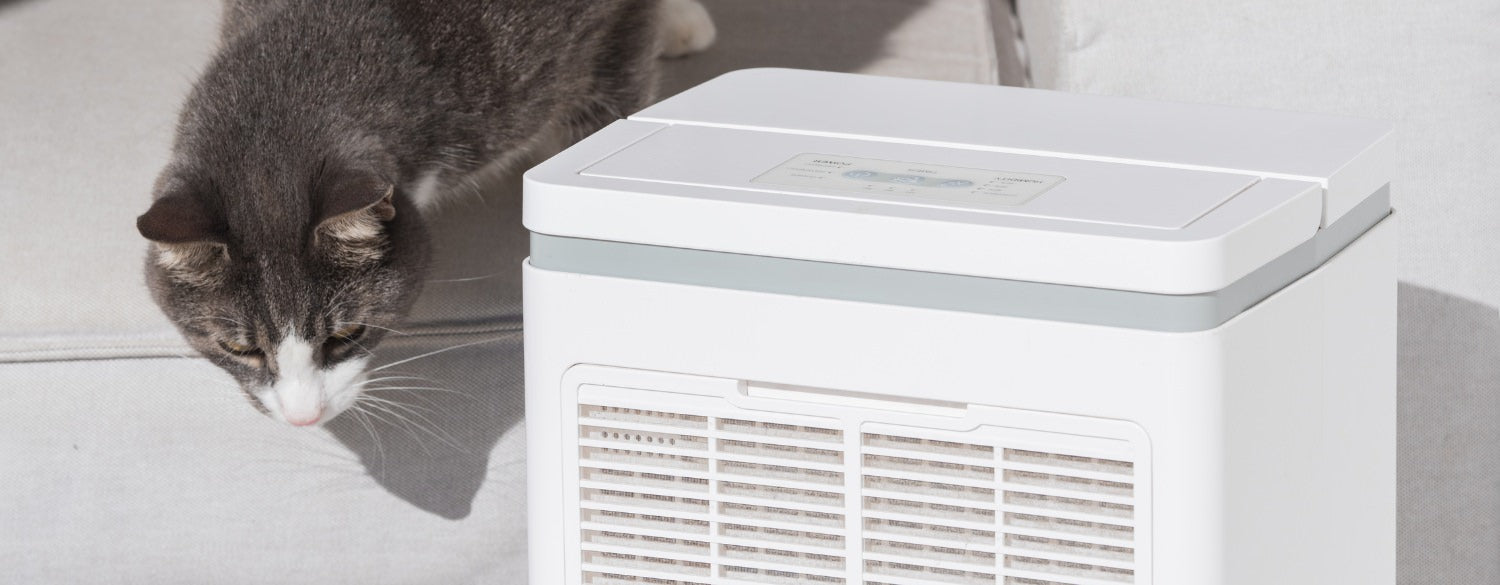
- Place the unit 3 to 6 feet from the litter box, not right next to it.
- Keep 12 inches of clearance on all sides for airflow.
- Run the purifier 24/7 on low or medium. Use high for 30 to 60 minutes after scooping.
- Replace pre-filters monthly if washable, or as needed.
- Replace carbon and HEPA on schedule to avoid odor breakthrough.
- Vacuum floors and soft surfaces weekly to cut particle load.
I keep a monitor that reads particles and VOCs. You do not need one, but it helps tune fan speed and placement.

Complementary Strategies Beyond Purifiers
A purifier is one tool. The home habits matter just as much. Will air purifier help with cat smell without clean litter habits? Not for long.
Try these simple moves:
- Scoop twice a day. Top off litter to the depth your cat likes.
- Use a high-quality clumping or crystal litter that locks in odor.
- Wash litter mats, throw blankets, and sofa covers each week.
- Vent the room for 10 minutes a day if weather allows.
- Use enzyme cleaners on accidents to break down odor at the source.
- Check your cat’s health. Strong ammonia smell can signal dehydration or a UTI.
Will air purifier help with cat smell if the litter box is covered? Sometimes that traps odor, but it can also concentrate fumes. Try an open box in a ventilated area and see if behavior and odor improve.

Cost, Efficiency, And ROI
Let’s talk money and time. A solid purifier can run for pennies per hour. Filters are the main cost. Deep carbon costs more up front but lasts longer and works better for odor.
What I see in the field:
- Electricity: low to moderate on medium speed.
- Filters: plan for HEPA yearly and carbon every 3 to 6 months, depending on odor load.
- Time saved: fewer deep clean sessions, faster refresh after guests or litter changes.
Will air purifier help with cat smell enough to justify the cost? In most pet homes I visit, yes. The combo of cleaner air, less dust, and lower odor makes a clear quality-of-life bump.

Frequently Asked Questions of will air purifier help with cat smell
Will a HEPA-only purifier remove cat odor?
HEPA reduces dander and dust but does not remove most odor gases. You need a real activated carbon filter to tackle the smell.
How long before I notice less cat smell?
Many people notice a change within a few hours. With a right-size unit, a clear drop in odor often shows by the next morning.
Where should I place the purifier for best results?
Place it in the same room as the litter box with clear airflow around it. Avoid corners and tight shelves that block intake or exhaust.
How big should the purifier be for my room?
Choose a model that gives 4 to 8 air changes per hour for your room size. Check the CADR and match it to your square footage and ceiling height.
Do ionizers help with cat smell?
Ionizers can reduce particles but have limited effect on gases. For odor, activated carbon is the workhorse.
Can I run the purifier all day?
Yes, and that often works best for odor control. Use low or medium most of the time and high after scooping or during guests.
Will a purifier help if my cat has accidents?
It will reduce the lingering smell in the air. Use enzyme cleaners on surfaces to remove the source.
Conclusion
A well-chosen purifier with true HEPA and a deep activated carbon filter can make cat odor fade fast and stay under control. It works best with the right size, smart placement, steady run time, and clean litter habits. If you keep asking yourself, will air purifier help with cat smell, the answer is yes—when you match the tool to the job and support it with simple daily steps.
Ready to breathe easier? Pick a unit sized for your space, set it near the litter area, and let it run. Subscribe for more pet air quality tips, or drop a comment with your room size and setup, and I’ll help you tune it.