The best dry food for cats delivers high protein, real meat, and balanced nutrition.
You want strong muscles, a shiny coat, and steady energy in your cat. But the bag aisle is a maze. Bold claims. Cute photos. Buzzwords on every label. I have tested kibble with picky eaters, sensitive stomachs, and indoor loungers. I look at the ingredient list first. Then I check the protein quality, fiber type, omega-3s, and digestibility. If you want the best dry food for cats that fits your budget and your cat’s needs, this review will help you choose with confidence.
Purina ONE Tender Selects With Real Salmon (7 lb)

Purina ONE Tender Selects with Real Salmon blends crunchy kibble and tender bites. The first ingredient is real salmon, which supports lean muscles. It also provides omega fatty acids for skin and coat health. Many cats like the mix of textures in this formula.
This food includes added vitamins, minerals, and taurine. It supports heart health and eye function. The fiber blend helps with digestion and everyday regularity. I also like that it has no artificial flavors or preservatives.
Pros:
- Real salmon as the first ingredient for strong muscles
- Crunchy and tender textures that picky eaters enjoy
- Omega-6 and omega-3 fatty acids for skin and coat
- Added taurine for heart and eye health
- Balanced fiber to support digestion and hairball control
- No artificial flavors or preservatives
Cons:
- Salmon-forward scent can be strong in small spaces
- Not grain-free; may not suit cats with certain sensitivities
- Kibble size may be a bit large for tiny mouths
My Recommendation
This is a smart choice if you want a tasty, balanced salmon formula. It fits adult indoor cats and active cats who need steady protein. The texture mix often wins over fussy eaters. It is a strong contender when you want the best dry food for cats without a high price.
If your cat needs extra skin and coat support, start here. If your cat has known grain allergies, choose a grain-free option instead. Always transition slowly over 7 to 10 days. That helps avoid stomach upsets and keeps meals stress-free.
| Best for | Why |
|---|---|
| Picky eaters | Mix of crunchy and tender textures boosts interest |
| Skin and coat health | Salmon protein and omegas support a glossy coat |
| Everyday adult nutrition | Complete and balanced with taurine and key vitamins |
Purina Cat Chow Naturals Original (13 lb)
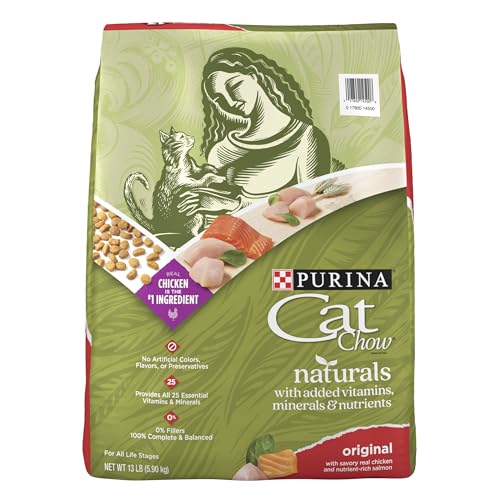
Purina Cat Chow Naturals Original aims for simple nutrition at a fair price. It includes natural ingredients with added vitamins and minerals. The protein blend supports lean body mass and everyday energy. It is a practical pick for multi-cat homes and budget-conscious families.
This formula often appeals to cats who like chicken-forward flavors. It supports hairball control with fiber. It also includes taurine, which is vital for heart and eye health. I find it easy to rotate this food with wet meals for better hydration.
Pros:
- Balanced nutrition with added vitamins and minerals
- Good value for large households and daily feeding
- Fiber helps reduce hairballs and supports digestion
- Palatable for most adult cats, even picky ones
- Simple, natural ingredient focus without flashy gimmicks
Cons:
- Not grain-free; not ideal for grain-sensitive cats
- Protein level may be modest for very active or large breeds
- Bag is large; use an airtight bin to keep it fresh
My Recommendation
Choose this if you need steady, reliable nutrition at scale. It suits indoor adult cats and homes with two or more cats. It is easy to digest for most cats and mixes well with canned food. For many households, it delivers the best dry food for cats value per serving.
If your cat needs extra protein, pair this with a high-protein wet topper. Keep fresh water nearby and watch litter box habits for signs of digestive comfort. If your cat has known grain issues, consider a grain-free option instead.
| Best for | Why |
|---|---|
| Multi-cat homes | Big bag, fair price, and broad palatability |
| Hairball-prone cats | Fiber blend helps reduce hairball formation |
| Daily adult feeding | Complete and balanced with essential nutrients |
How to Choose the Best Dry Food for Cats
Start with the ingredient list. Look for real meat as the first ingredient. Chicken, turkey, salmon, or beef are common. Meat meal can also be a good, concentrated protein source.
Next, check the guaranteed analysis. Most adult cats do well with higher protein. Aim for at least the mid-30s by percentage on a dry matter basis. Fat around 12% to 18% keeps energy steady and coats healthy.
Confirm it meets AAFCO standards for your cat’s life stage. A label that says “complete and balanced” is key. Taurine must be there. So must vitamins, minerals, and essential fatty acids.
Scan for filler overload. A little rice, oats, or barley can help digestion. But avoid heavy fillers as the first ingredients. Balance matters more than buzzwords.
What Makes the Best Dry Food for Cats Stand Out
High-quality animal protein sits at the center. Cats are obligate carnivores. They thrive on meat. Protein supports muscle maintenance, immune strength, and daily energy.
Digestible carbs and fiber help gut health and hairball control. Prebiotics, like chicory root, support the microbiome. A happy gut equals better stools and less mess.
Omega fatty acids improve coat quality and skin comfort. Salmon oil and fish meal add EPA and DHA. These also support brain and eye health.
Consistency across bags matters. Top brands hold a steady formula and supply chain. Your cat’s stomach likes routine. So will your budget and your peace of mind.
Ingredient Decoder: Reading a Cat Food Label
Meat first is a smart rule of thumb. “Salmon” or “chicken” are clear signals. “By-product meal” can vary in quality. It can add nutrients, but I prefer named meals like “chicken meal.”
Check the fat sources next. Chicken fat or fish oil add omegas and flavor. Plant oils like sunflower oil can support omega-6. Balance with omega-3s to keep skin calm.
Fiber should be gentle and varied. Beet pulp, rice, oats, and prebiotics help. Too much hard fiber can cause large, dry stools. Quality blends keep things smooth.
Additives should have a purpose. Taurine, l-carnitine, and chelated minerals can help. Artificial colors do nothing for cats. I skip foods that rely on them.
Protein Quality and Why It Matters
Protein fuels muscle repair and immune defense. Cats use amino acids like taurine and arginine daily. Animal sources supply these in the right balance. Plant protein alone cannot match that.
Look for named meats and meat meals. They offer a concentrated amino acid profile. That gives your cat better muscle tone and steady energy. It also supports a healthy heart.
The best dry food for cats gives more meat and better digestibility. That means fewer stools and less smell. It also means your cat absorbs more nutrients per bite.
Carbs, Fiber, and Digestive Health
Carbs can help shape kibble and add energy. In small amounts, they support gut function. Rice, oats, and barley are common and gentle. Sweet potato can work too.
Fiber is your friend when hairballs strike. Moderate fiber helps hair move through. Prebiotic fiber feeds good gut bacteria. Stool quality often improves with these blends.
Watch for signs of intolerance. Gas, loose stools, or itch could be clues. Talk to your vet if symptoms persist. A small recipe change might solve it.
Fat, Omegas, and Skin-Coat Care
Fat makes food taste good and supports energy. Omegas lower skin irritation and soften coats. Fish oil brings EPA and DHA to the bowl. These also support brain and eye health.
Look for a balance of omega-6 and omega-3. Too much omega-6 can drive itch. Omega-3s calm that fire. The best dry food for cats keeps this balance in mind.
Shine in the coat often shows inner health. When skin looks calm, the gut often feels good. Food and hydration both play a role. Keep fresh water near every bowl.
Life Stage and Special Needs
Kittens need extra protein, fat, and DHA. Choose a formula that says growth or all-life-stages. Feed small, frequent meals. Monitor weight and energy each week.
Adults need balanced macros and steady fiber. Hairball formulas can help at shedding times. Keep portions measured. Adjust with activity and body condition.
Seniors need easy-to-digest protein and joint support. Glucosamine and omega-3s help mobility. Watch weight and hydration. Consider more wet food to support kidneys.
Weight management foods cut calories but keep protein high. That helps preserve lean mass during weight loss. Use a digital scale for portions. Recheck weight every two weeks.
Hydration: Why Kibble Needs a Plan
Cats have a low thirst drive by nature. Kibble alone can lead to low water intake. Add a wet meal or topper to boost moisture. A fountain also helps many cats drink more.
Hydration supports kidneys and urinary health. It also helps prevent constipation. Mix a spoon of water into kibble if your cat accepts it. Keep litter boxes clean to monitor output.
How I Test and Compare Dry Cat Foods
I start by reading the label line by line. I check for AAFCO adequacy and taurine. I look for meat-first formulas and clear fat sources. I avoid artificial colors.
I test palatability with picky cats. I watch bowls, crumbs, and sniff time. I also track stools for size and smell. Good digestibility shows up fast.
I monitor coat and energy across two weeks. A glossy coat and steady play are good signs. I also keep an eye on hairballs. Less hacking means the fiber blend works.
Lastly, I weigh the value. I compare cost per ounce and per day. The best dry food for cats should fit your budget and goals. You should not pay for hype.
Transition Tips for a Happy Stomach
Switch slowly to avoid tummy trouble. Start with 75% old food and 25% new. After two days, move to 50-50. Then 25-75. Finish at 100% new by day seven to ten.
Add a spoon of warm water to boost aroma. This can help picky cats accept new kibble. Keep meal times calm and quiet. Praise after each meal helps nervous cats.
If stools get loose, slow down. Hold at the current ratio until they firm. If issues continue, talk with your vet. Every cat’s gut is unique.
Storage and Freshness
Air and light reduce freshness fast. Move kibble to an airtight bin. Keep the original bag and lot code inside. That helps in case of a recall.
Store in a cool, dry place. Avoid heat and humidity. Wash the bin between refills. Old oils can go rancid and affect taste.
Buy the right bag size for 4 to 6 weeks. Fresh food smells better and tastes better. Your cat will notice. So will the litter box.
Budget vs. Premium: Finding Your Value
Premium foods often use more meat and add functional extras. That can help sensitive skin or picky eaters. You may feed a bit less due to density. That narrows the cost gap over time.
Budget foods can still be balanced and safe. Look for meat-first formulas and clear labels. Avoid flashy claims that hide low meat content. The best dry food for cats gives you clear value in every bite.
Match the food to your cat’s body and lifestyle. An indoor lap cat needs fewer calories. An active young cat may thrive on higher protein. Your eyes and hands tell the truth at weigh-ins.
Signs Your Cat’s Kibble is Working
Coat looks glossy and skin stays calm. Stools are formed and not too large. Breath smells normal. Energy is steady, not spiking or crashing.
Your cat finishes meals without fuss. Hairballs are rare. Weight holds steady in a healthy range. Litter habits are normal and easy to scoop.
These are your daily checkpoints. The best dry food for cats gives consistent wins. Small changes add up over time.
When to Ask Your Vet
Call your vet if you see vomiting, diarrhea, or dramatic itch. Weight loss, thirst changes, or litter box troubles matter. These can signal deeper issues. Do not wait and hope.
Your vet may suggest a therapeutic diet. Only feed those under vet guidance. They target kidney, urinary, or GI needs. They are not everyday maintenance foods.
Bring photos of the label and the feeding chart. Bring a stool photo if needed. Precise details help your vet help you fast.
FAQs Of best dry food for cats
How much protein should the best dry food for cats have?
Look for at least the mid-30s in protein on a dry matter basis. Higher protein helps maintain lean muscle. Always confirm it meets AAFCO for your cat’s life stage.
Is grain-free always better?
Not always. Many cats do well with moderate grains like rice or barley. Focus on meat-first recipes and good digestibility. Talk to your vet if your cat has true grain issues.
How can I prevent hairballs with kibble?
Choose a food with balanced fiber and prebiotics. Brush your cat often. Add a wet meal for hydration. Hydration helps hair pass smoothly.
Do I still need wet food if I feed dry?
Wet food boosts water intake and supports urinary health. I like a mixed feeding plan. Keep fresh water out at all times too.
How long should a bag of kibble last?
Plan for 4 to 6 weeks once opened. Use an airtight bin and store in a cool, dry place. Freshness impacts taste and nutrition.
Final Verdict: Which Should You Buy?
Choose Purina ONE Tender Selects With Real Salmon if you want a meat-first, texture-rich formula. It supports skin, coat, and lean muscle. It often pleases picky eaters.
Pick Purina Cat Chow Naturals Original for multi-cat value and easy daily feeding. It is a reliable, balanced choice. Both can be the best dry food for cats based on your cat’s needs.