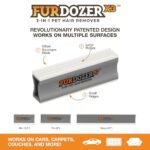
Use a rubber brush or nitrile glove to rake hair into piles, then vacuum slowly with strong suction.
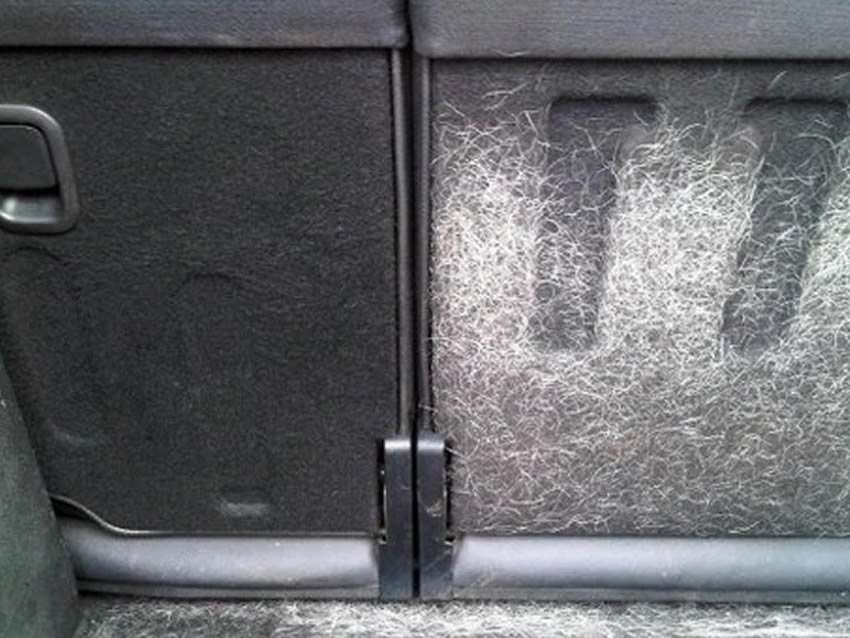
If you have ever spent an hour battling fur that clings like Velcro, you are not alone. I have detailed hundreds of pet-friendly cars, and I know how to remove pet hair from car interiors fast and safely. This guide breaks down proven methods, expert tools, and simple routines so you can restore a clean, hair-free ride without stress.
Why pet hair sticks to your car fabrics
Pet hair bonds to car seats due to static, texture, and oils. Synthetic fibers build static that grabs hair like a magnet. Looped carpet and woven cloth trap strands down in the nap, where basic vacuums cannot reach.
Body oils add grip and hold hair in place. Humidity and heat can make it worse. Knowing this makes how to remove pet hair from car seats easier, because you will target the cause, not just the mess.
Essential tools that actually work
Over the years, I have tested many tools. These are the ones that pull hair fast and protect fabrics.
- Rubber pet hair brush. The soft rubber creates friction and lifts hair without damage.
- Nitrile or latex gloves. Lightly dampen and sweep with your palm to ball up hair.
- Squeegee with a soft edge. Great for carpet mats and low-pile seats.
- Vacuum with strong suction. Use a crevice tool and a turbo brush if you have one.
- Microfiber towels. Use short, tight weaves for clumping hair.
- Spray bottle with water and a drop of fabric softener. A light mist reduces static.
- Lint roller and painter’s tape. For tight spots like seams, belts, and stitching.
- Compressed air or blower. Pushes hair out of corners and under rails.
Use care with abrasive tools. Pumice stones can work on tough carpet mats but can scratch plastic and snag fibers. Test every tool in a hidden area first.
If you want how to remove pet hair from car interiors like a pro, build a small kit and keep it in your trunk. You will save time after every trip.
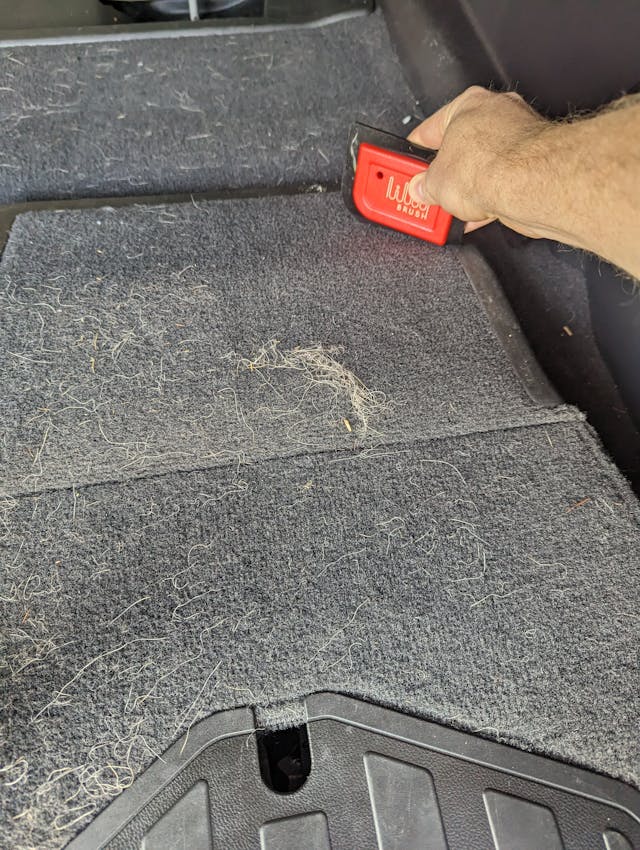
Quick methods by surface
Different surfaces need different moves. Here is the fast playbook I use.
Cloth seats and carpet
- Mist a fine spray of water and fabric softener mix. Do not soak.
- Rake hair with a rubber brush or glove in one direction.
- Vacuum slowly. Pull against the fabric grain.
Floor mats
- Remove mats. Brush hair into piles with a squeegee or rubber brush.
- Vacuum on a firm surface. Repeat until clean.
- Optional: wash rubber mats and dry fully.
Leather or vinyl
- Avoid harsh brushes. Use a damp microfiber towel.
- Light mist of anti-static spray on the towel only.
- Wipe in short strokes, then vacuum seams and stitching.
Headliner
- Be gentle. Use a dry microfiber towel or a soft glove.
- Light dabs, not scrubbing, to avoid sagging.
- Vacuum with low suction.
Cargo area and trunk
- Work edges with a crevice tool.
- Blow out corners, then brush and vacuum.
- Consider a cargo liner for next time.
These steps are the core of how to remove pet hair from car surfaces without harming them.

Step-by-step: the fast, deep-clean workflow
This is my go-to process when a car is covered in fur. It works in any season.
- Open doors and remove loose items. Take out floor mats and seat protectors.
- Pre-vacuum everything. Do a quick pass to remove loose debris.
- Kill the static. Lightly mist seats and carpet. Let it sit for 30 seconds.
- Rake and roll. Use a rubber brush or glove to pull hair into visible lines and balls.
- Vacuum slowly. Use short, overlapping strokes and a crevice tool for seams.
- Detail tight areas. Use painter’s tape or a lint roller on belts, pedals, rails, and stitching.
- Second brush pass. Any hair left gets brushed toward the vacuum nozzle.
- Final check. Use a flashlight to catch what the eye misses.
Time guide from my experience:
- Light hair: 15 to 25 minutes.
- Moderate hair: 30 to 45 minutes.
- Heavy shedding: 60 to 90 minutes.
If you follow this flow, you will master how to remove pet hair from car interiors with less effort and better results.

Stubborn hair, allergens, and odor control
Some hair is fused to fibers by oil and static. Break the bond first.
- Pre-treat with an enzyme interior cleaner. Mist lightly, wait 2 to 3 minutes, then brush and vacuum.
- For allergy relief, use a vacuum with a HEPA filter. It traps dander and fine dust.
- If hair is embedded, agitate with a soft upholstery brush. Keep pressure light.
- For odors, sprinkle baking soda, wait 20 minutes, then vacuum. Enzymes help with pet accidents.
Avoid heavy moisture. Soaked seats can cause mildew. When learning how to remove pet hair from car fabrics, less liquid is safer and faster.

Prevention and maintenance checklist
Prevention turns a 90-minute job into a 10-minute touch-up. Here is what works best.
- Use a washable pet seat cover or hammock. Choose a tight weave that does not trap hair.
- Brush your pet before rides. A 60-second de-shed saves time later.
- Keep a glove and lint roller in the door pocket. A quick swipe after each trip cuts buildup.
- Light anti-static mist before long rides. Less static means less cling.
- Set a weekly five-minute routine. Quick vacuum, quick brush, quick win.
These habits make how to remove pet hair from car seats almost effortless over time.
Cost and time: DIY vs hiring a pro
DIY costs are low and tools last a long time. A basic kit runs less than a tank of gas and saves hours each month.
- DIY supplies. Rubber brush, gloves, microfiber, lint roller, spray bottle.
- Time. 15 to 90 minutes, based on hair level and tools.
- Pro detail. Expect added fees for heavy pet hair removal.
Hire a pro if the interior is soaked, stained, or if you have severe allergies. For most drivers, knowing how to remove pet hair from car upholstery is enough to keep the cabin clean year-round.

Frequently Asked Questions of how to remove pet hair from car
What is the fastest way to remove pet hair from car seats?
Use a damp nitrile glove to sweep hair into piles, then vacuum slowly. Work in one direction and use a crevice tool for seams.
Can fabric softener spray damage my seats?
A very light mist diluted with water is safe on most cloth seats. Always test in a hidden area and avoid soaking.
How do I get pet hair out of tight seams and seat belts?
Use painter’s tape or a lint roller to lift hair without residue. Follow with a crevice tool to finish.
Does a pumice stone work on car carpet?
It can work on tough carpet mats, but it can scratch plastic and snag fibers. Use with care and never on seats or trim.
How often should I clean to stay ahead of hair?
Do a quick five-minute brush and vacuum once a week. Add a full deep clean once a month if your pet sheds a lot.
What kind of vacuum is best for pet hair in cars?
Choose strong suction with a narrow nozzle and, if possible, a turbo brush. A HEPA filter helps with dander and fine dust.
Will anti-static sprays help reduce pet hair cling?
Yes, they lower static so hair releases easier. Spray onto a cloth first, then wipe surfaces lightly.
Conclusion
A clean, fur-free car is possible with the right tools, a simple plan, and a few smart habits. You now know how to remove pet hair from car interiors quickly, safely, and with less effort. Start with a light mist, rake with rubber, and vacuum slow. Then lock in a short weekly routine to keep hair under control.
Ready to take action today? Build your small kit, try the step-by-step workflow on one seat, and see the difference in minutes. If you found this helpful, subscribe for more car care guides, ask a question, or share your own tips in the comments.