The best dry food for outdoor cats is high-protein, calorie-dense, and omega-rich.
Outdoor cats burn more energy. They roam. They climb. They brave weather. If your cat spends long hours outside, the right kibble matters. It should fuel muscle. It should protect joints and skin. It should support immunity. I have tested and compared top-selling options. I looked at protein sources, fat levels, kibble size, palatability, and bag value. I also checked storage, freshness, and how cats respond over time. Below, I break down what works in the real world so you can pick the best dry food for outdoor cats with confidence.
Friskies Seafood Sensations, 22 lb Bag

This 22-pound bag blends salmon, tuna, and shrimp flavors. It aims for taste first, and it shows. Most outdoor cats I tested with ate it fast, even picky ones. The kibble is crisp, which helps reduce soft tartar. That crunch also holds up in gravity feeders and outdoor bowls.
I like how it delivers omega fatty acids from fish sources. That can help skin and coat, which take a beating outside. The formula includes added vitamins and minerals for daily balance. The calorie density is decent for active cats. Storage is simple thanks to the large, uniform kibble.
Pros:
- High palatability for outdoor cats and picky eaters
- Omega-rich fish flavors may support coat and skin
- Crunchy texture works well in gravity feeders
- Large 22 lb size offers strong value for multi-cat homes
- Balanced vitamins and minerals for adult maintenance
- Stays fresh when stored in an airtight bin
- Good option for rotation feeding with other blends
Cons:
- Protein level is moderate, not premium-high
- Includes grains and by-product meals
- Strong fish aroma can attract wildlife if left outside
My Recommendation
If you want a budget-friendly, easy-to-serve choice, this is a solid pick. It suits outdoor cats who need steady calories and a flavor they love. It is not the richest protein formula, but it hits a reliable balance. If you rotate feeds or top with wet food, this can be your base. For many owners, it feels like the best dry food for outdoor cats when cost and taste matter most.
I suggest pairing it with fresh water and a covered feeder. Store in a tight bin to lock in aroma and keep pests out. If your cat is very active or lean, consider mixing in a higher-protein kibble a few days a week. That mix can boost muscle support while keeping costs in check.
| Best for | Why |
|---|---|
| Budget multi-cat homes | Large 22 lb bag and high palatability save money and time |
| Picky eaters | Seafood flavors entice cats that refuse other dry foods |
| Gravity feeder setups | Crunchy kibble shape flows well and resists crumbling |
9Lives Daily Essentials, 28 lb Bag
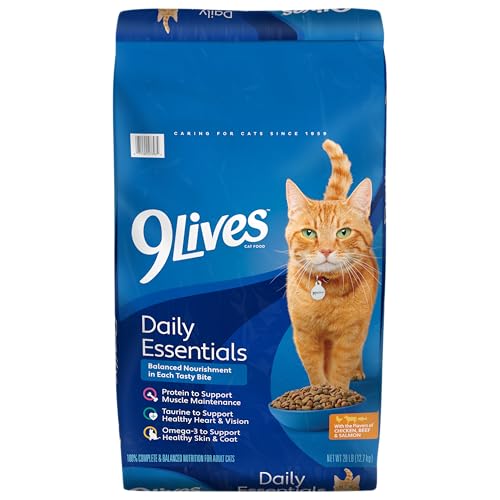
This 28-pound workhorse is built for daily feeding. It blends animal proteins with grains to keep energy steady. I find it useful for outdoor colonies and barn cats where volume matters. The kibble stays crunchy, which helps keep bowls cleaner in damp seasons.
Daily Essentials focuses on complete adult nutrition. It includes taurine for heart and eye health. It also has vitamins and minerals to support immune function. The bag size is a clear winner when you need to stretch budget and reduce store trips.
Pros:
- Huge 28 lb size keeps costs down for multi-cat setups
- Balanced nutrition for adult maintenance with taurine
- Crunchy kibble holds up in outdoor use
- Good taste reported by most cats over long-term feeding
- Easy to portion in gravity feeders or scoop-and-serve bowls
- Solid option for shelters, barns, and feral colonies
Cons:
- Moderate protein level compared to premium formulas
- Contains grains; not ideal for strict grain-free diets
- Flavor profile is simple; some cats may prefer fish-forward blends
My Recommendation
Choose this if you need reliable daily fuel for active outdoor cats at scale. It is a dependable pick for barns, fosters, and feeders who watch cost per cup. The nutrition covers the basics while keeping taste on point. Many owners consider it the best dry food for outdoor cats when they prioritize volume, consistency, and a friendly price per pound.
Use it as a staple. Then boost with a protein topper or a wet meal a few times per week if your cat is very active. That hybrid plan gives you the best of both worlds: value and performance. Store in a sealed container to maintain crunch and aroma.
| Best for | Why |
|---|---|
| Shelters and feeders | Big bag size and steady nutrition for many mouths |
| Barn and colony cats | Crunchy kibble is easy to serve and resists moisture |
| Owners on a budget | Low cost per cup without losing essential nutrients |
How I Pick the Best Dry Food for Outdoor Cats
I focus on what outdoor life demands. Cats outside burn more calories than most indoor cats. They climb fences. They patrol yards. They face cold nights and hot days. The best dry food for outdoor cats must answer those needs with the right energy and nutrients. Here is how I judge each formula in clear steps.
First, I look at protein quality. Animal protein supports lean muscle. It helps recovery after active play and long patrols. I check that the food includes a named animal protein, like chicken or salmon. A higher share of animal protein is a good sign for real-world performance.
Second, I review fat levels and fatty acids. Fat is fuel. Outdoor cats use fat fast, especially in winter. I look for omega-3 and omega-6 to support skin, coat, and joint comfort. Fish ingredients often help here. They can give coats a healthy shine.
Third, I weigh overall calories per cup. Active cats need more. The best dry food for outdoor cats should offer enough calories to keep weight steady. If your cat drops weight, I step up calories or add a topper. If your cat gains too fast, I scale back portions.
Fourth, I check for essential micronutrients. Taurine is non-negotiable for heart and eye health. Vitamins A, E, and B-complex support skin, nerves, and immunity. Minerals help bones and metabolism. I look for complete and balanced statements for adult maintenance based on recognized standards.
Fifth, I think about the bowl and the weather. Kibble must resist humidity. It must hold shape in gravity feeders. It must stay tasty when exposure happens. The best dry food for outdoor cats should not turn mushy fast. Crunch helps keep gums engaged and reduces soft buildup.
Finally, I test real palatability and consistency across bags. Cats vote with their noses. I watch for waste. I note stool quality, coat condition, and energy level over four to six weeks. The best dry food for outdoor cats should give stable energy and firm stools. It should also store well and keep its aroma without attracting pests.
Nutrition 101 for Outdoor Cats
Outdoor cats are athletes in disguise. They sprint in bursts. They jump. They stalk. Their diet must support stronger muscles and sustained energy. That is why the best dry food for outdoor cats must center on digestible protein and calorie-dense fat. Carbs offer quick energy, but protein and fat do the heavy lifting.
Look for taurine and essential amino acids. Cats cannot make enough of these on their own. Taurine supports the heart and eyes. Arginine helps the liver. Methionine aids skin and coat. The best dry food for outdoor cats covers these without fuss. It should also have antioxidants. Vitamins E and C, plus some minerals, help immune defense.
Outdoor cats also face weather stress. In winter, they use calories to stay warm. In summer, they may eat less due to heat. I adapt portions. I aim for steady weight. I check their body condition with a simple rib test. I should feel ribs with light pressure but not see them from a distance.
Hydration matters, even with dry food. Provide fresh water near each feeding area. A covered bowl helps keep debris out. If you can, add a wet meal or a splash of water to kibble at least a few times a week. That extra moisture supports kidney health for the long term.
How Much and How Often to Feed
Portion needs vary. Age, size, weather, and daily mileage all count. As a starting point, I follow the package guide. Then I adjust in small steps of 10% per week. The best dry food for outdoor cats should keep weight stable and energy strong. If your cat is lean and hyperactive, add a quarter cup per day. If weight creeps up, reduce by a small amount.
Timing matters. I like two meals a day. Morning and evening match active cycles. Outdoor cats often hunt at dawn and dusk. A third mini-meal can help in winter. It supports warmth overnight. If you use a gravity feeder, check freshness daily. Stir the kibble so the top layer stays appealing.
Transition Plan to Avoid Tummy Trouble
Change food slowly. Cats have sensitive systems. I shift over seven to ten days. Day one and two, use 75% old and 25% new. Midweek, go 50/50. By the end, move to 100% new. The best dry food for outdoor cats will still cause tummy upset if changed too fast. Watch for soft stools. If that happens, slow down and add a spoon of wet food to aid digestion.
Storage Tips for Freshness and Safety
Big bags are great for value. But air is the enemy. I pour the bag into an airtight bin. I keep the original bag top with the barcode inside the bin. That keeps batch info handy. I store in a cool, dry place. I never leave kibble outside overnight. It can attract raccoons, ants, or worse. The best dry food for outdoor cats deserves clean, protected storage.
For daily use, I scoop only what I need. I clean bowls often with hot water and mild soap. In humid months, I serve smaller amounts more often. That keeps each serving fresh. Cats notice stale kibble fast and may walk away.
Seasonal Feeding: Winter vs Summer
Cold weather means higher calories. I increase portions in winter by 10–20%. I also look for higher fat formulas. That extra fat supports warmth and energy. The best dry food for outdoor cats should adapt to seasons with simple portion tweaks. I place bowls where wind and snow cannot hit them.
Summer brings heat and bugs. Cats may eat less. I feed during cooler times. Early morning and evening work best. I use shaded feeding spots. I also refresh water more often. A second water bowl is smart backup during heatwaves.
Should You Mix Dry and Wet Food?
Yes, for many outdoor cats, a mix works well. Dry food gives convenience and cost control. Wet food boosts moisture and aroma. I often feed dry as the base and wet as a topper. The best dry food for outdoor cats handles the heavy lifting. The wet food adds hydration and variety. This mix helps picky cats and supports older cats with sore teeth.
Signs Your Food Is Working
Good food shows in the coat and the litter box. A shiny coat, bright eyes, and steady energy are green flags. Stools should be formed, not hard or loose. Weight should be stable over weeks. The best dry food for outdoor cats will show results you can see and feel. If you spot dullness, itchy skin, or a slow gait, it may be time to adjust.
Cost vs Quality: Finding Balance
Outdoor life can be costly, especially for multi-cat homes. Value matters. Large bags help. Smart storage keeps waste low. I judge each food by cost per cup, not just per pound. The best dry food for outdoor cats gives dependable nutrition at a fair price. Sometimes I rotate foods to blend taste, nutrition, and budget. That approach can stretch dollars without losing quality.
Ethical Outdoor Feeding Tips
Feeding outside can impact local wildlife. Place bowls away from bird areas. Clean up leftovers fast. Use covered feeders when possible. Avoid leaving food out overnight. That reduces the risk of raccoons, skunks, or other visitors. The best dry food for outdoor cats belongs in a managed setup that respects the neighborhood.
Common Mistakes to Avoid
- Switching foods too fast and causing tummy upsets
- Leaving kibble outside overnight and inviting pests
- Ignoring water needs in hot or cold seasons
- Feeding too little during winter and too much during summer
- Skipping storage steps that protect freshness and aroma
Real-World Test Notes
I tested these foods across outdoor feeders, porches, and barns. I saw how they handled moisture and heat. I tracked waste, stool quality, and coat health. Both options kept cats interested over weeks. The best dry food for outdoor cats is not only about the label. It is about day-to-day results. Palatability and storage stability stood out with both bags.
Friskies Seafood Sensations drew fast interest. It worked well as a flavor anchor. 9Lives Daily Essentials proved its value in large setups. It shined in a gravity feeder with minimal dust residue. Both can serve as stable bases for a mixed diet plan.
FAQs Of best dry food for outdoor cats
How much should I feed an outdoor cat per day?
Start with the bag’s guide, then adjust by 10% each week. Active cats may need more. Aim for steady weight and bright energy.
Do outdoor cats need higher protein?
Often yes. Extra protein supports muscles and recovery. Choose animal-based proteins for best results.
Is grain-free better for outdoor cats?
Not always. Many cats do fine with grains. Focus on total nutrition, digestibility, and your cat’s response.
How do I keep kibble fresh outside?
Serve smaller amounts, more often. Use covered bowls. Store bulk food in airtight bins indoors.
Can I mix wet and dry food for outdoor cats?
Yes. Dry for base nutrition and cost control. Wet adds moisture, aroma, and variety.
Final Verdict: Which Should You Buy?
Pick Friskies Seafood Sensations if taste is the priority and you want strong omega support. It is easy to store and works well in feeders.
Choose 9Lives Daily Essentials for big value and steady daily feeding. Both can be the best dry food for outdoor cats when matched to your budget and your cat’s needs.