The best dog food storage container keeps kibble fresh, airtight, and pest-proof.
You fill the bowl, your dog sniffs and walks away. You notice a stale smell, a greasy feel, maybe even a few crumbs at the bottom of the bag. Air, light, heat, and pests spoil kibble fast. The right bin fixes all of that. An airtight seal locks out moisture. Hard walls stop crushing and help the food keep its shape. You save money because the food lasts longer. Your dog gets the taste and crunch they expect at every meal.
Gamma2 Vittles Vault 50 lb Airtight Container
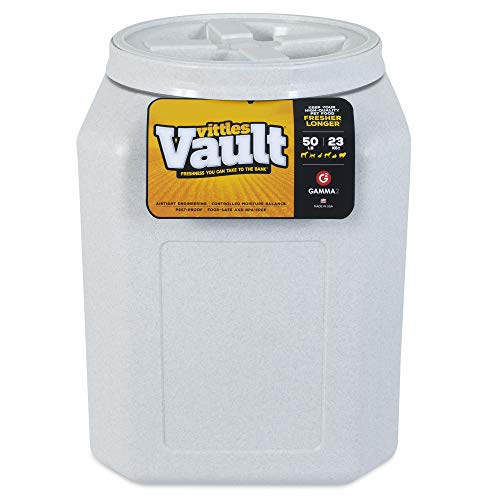
This rugged, USA-made container is a favorite for big bags and bigger dogs. The Gamma2 Vittles Vault uses a screw-on lid with a thick rubber gasket to form a true airtight seal. The square footprint stores well in a pantry, garage, or mudroom, while the tall profile saves floor space. With a capacity that fits up to 50 pounds of dry food, it handles bulk buys without stress.
The heavy-duty, food-grade plastic resists chewing, cracking, and odors. The threaded lid is easy to grip with wet or dry hands and opens in seconds for scoop-and-go feeding. The molded body is tough to tip and simple to clean with mild soap and warm water. If you want the best dog food storage container for freshness and pest control, this vault is a standout.
Pros:
- Truly airtight screw-on lid keeps kibble fresh longer
- Food-grade, BPA-free plastic is safe and odor-resistant
- Fits up to 50 lb bags, ideal for large breeds and multi-dog homes
- Square, stackable shape saves space and stays stable
- Made in the USA with durable construction
- Gasketed seal deters ants, roaches, and pantry moths
- Wide opening makes scooping fast and clean
- Easy to wipe down and sanitize between bags
Cons:
- No built-in wheels; heavy when full
- Large footprint may not suit small apartments
- Screw-on lid needs a full turn to open or close
My Recommendation
If you buy in bulk, live with hot summers or humid air, or have a curious dog, this is a smart pick. The gasket and screw top beat simple snap lids for long-term freshness. I recommend keeping the kibble in its original bag inside the vault. This can add a light barrier against grease transfer and preserve the “best by” date and lot code for safety.
This is the best dog food storage container for most large households, especially if pests are a concern. It is also a strong choice for rural homes, garages, or sheds where temperature swings happen. The value is excellent when you factor in less waste, better taste, and fewer bugs. If you need mobility, place it on a rolling dolly.
| Best for | Why |
|---|---|
| Bulk 40–50 lb kibble bags | High capacity and wide mouth make transfers easy |
| Pest-prone areas | Airtight gasket and screw lid block ants and moths |
| Long-term freshness | Air, moisture, and odor control preserve flavor and crunch |
How to choose the best dog food storage container
The best dog food storage container solves three problems. It locks out air and moisture. It blocks pests. It makes feeding simple. Here is how I judge each bin before it earns a spot in my home.
Capacity and fit
Match the container to your bag size and space. A common rule of thumb is that one pound of dry kibble is about one quart in volume. That is a rough guide, as kibble shapes vary. A 25-pound bag often needs 22–28 quarts. A 50-pound bag may need 45–55 quarts.
Plan for a little headroom. You want space for the bag and room to scoop without spills. If you buy in bulk, consider two midsize bins. Rotate them so food never sits too long.
Airtight seal quality
A true airtight seal is the key to freshness. Look for a gasketed lid made from silicone or rubber. Screw-on lids usually seal better than simple snap tops. Clamps can work when the gasket is firm and the lid latches on all sides.
Test it with the smell check. If you cannot smell kibble when the lid is closed, air cannot get in as easy either. That is a good sign of a tight seal.
Material safety
Food-grade plastic is common and practical. It is light, sturdy, and easy to clean. BPA-free is a plus, though dry foods limit BPA issues. Stainless steel looks sleek and resists odors, but costs more and weighs more. Glass seals well, yet is heavy and unsafe if dropped.
I like textured plastic that hides scuffs. If your dog is a chewer, choose thick walls and a shape that is hard to grip with teeth. Store out of reach just in case.
Pest and odor control
Ants, roaches, and pantry moths can find tiny gaps. A gasket helps. So do tight threads or multi-point latches. Solid walls also help block odors that attract pests. If you have seen moths before, freeze new bags for 24–48 hours before storage. This helps prevent an infestation.
Use a dry, cool place. Heat speeds up the breakdown of fats in kibble. Odors grow faster in heat and humidity.
Ease of use
You will open the container twice a day or more. The lid should be easy to turn or latch with one hand. The opening should be wide enough for your scoop or measuring cup. If you have arthritis or grip limits, avoid stiff snap lids. Choose a lid with a big handle or a screw top that turns smooth.
Mobility and footprint
Wheels help when you buy 30–50 pound bags. If your bin has no wheels, set it on a rolling base. Measure your pantry shelf height and depth. Make sure the lid can open fully without moving the bin.
Design and stackability
Square or rectangular bins waste less space than round bins. They fit tight corners and stack better. If you stack, make sure the seal stays true with weight on top. Some lids flex and lose contact with the gasket when stacked.
Cleaning and maintenance
You should wash the container between bags. Use warm water and mild dish soap. Rinse well. Dry until no moisture remains before refilling. This prevents grease buildup and keeps old crumbs from changing the taste of the new batch. Do not use harsh bleach. It can leave odors behind.
My hands-on testing method for freshness
I test containers over a full bag cycle. I take one bag and split it between a sealed bin and a flimsy bag clip. I feed from both and note the change in smell, crunch, and oil feel over four to six weeks. I also track any pest activity using sticky traps near both storage spots.
Good bins keep kibble crisp, with no stale smell, and no oily residue on the scoop. The best dog food storage container keeps flavor the longest, even during humid mornings. I also watch for condensation inside the lid. If I see fogging, the seal is failing or the food went in while warm.
Best practices: how to store dog food right
Use these simple steps to protect your dog’s food. They are fast and they work. The goal is to keep air, heat, and light away.
- Keep the kibble in its original bag inside the container to protect fats and keep the lot code handy.
- Push out excess air from the bag before closing the lid.
- Store in a cool, dry place, away from sunlight and heat sources.
- Wash and dry the bin between bags to remove oil film.
- Use a clean scoop. Do not dip dog bowls into the bin.
- Finish the bag within 4–6 weeks of opening for best quality.
These steps reflect common advice from veterinary nutrition experts and pet food safety guidance. They reduce rancid smells and help maintain taste and texture. They also make recalls easier to check, since you keep the date and lot numbers on hand.
Sizing guide: how big a container do you need?
Container volumes can be confusing. Here is a quick, simple way to size your bin. It is not perfect, but it is close and practical for home use.
- Small dogs (5–20 lb): 10–15 quart container fits 8–12 lb bags.
- Medium dogs (20–50 lb): 20–35 quart container fits 15–30 lb bags.
- Large dogs (50–90 lb): 40–55 quart container fits 30–50 lb bags.
- Multi-dog homes: Two 30–40 quart containers help rotate flavors.
If space is tight, you can split a big bag into two smaller bins. Use one in the kitchen and one in a closet. This keeps the main stash sealed longer. The best dog food storage container for you must fit both the bag and your room.
How material choices affect freshness
Plastic is light and cost effective. Look for food-grade labels and a thick wall. Thin plastic flexes and leaks air around the lid. Stainless steel resists stains and smells. It costs more but looks great on display. It is also heavy and cold to the touch, which some people like in hot climates.
Glass seals very well, but break risk is real. It is best for small snacks or treats, not 30-pound bags. Wood looks nice but can absorb oil and odors. I avoid it for long-term kibble storage.
Common mistakes to avoid
Do not pour fresh kibble on top of old kibble. This hides stale crumbs and makes cleaning hard. Use up the last cup, then wash the bin. Dry it fully before refilling. Water inside the bin can breed mold.
Do not leave the scoop inside the container. Moisture and bacteria from bowls and hands can migrate. Store the scoop on a hook or a small cup outside the bin. Do not leave the bin in a hot garage in summer. Heat is the enemy of flavor and fat stability.
Signs your container is failing
Watch for these clues. They tell you it may be time to upgrade or replace the lid seal. They are easy to miss at first.
- New stale or cardboard-like smell when the lid opens.
- Greasy film on the scoop or the inside wall.
- Condensation or tiny droplets on the lid interior.
- Ants or moths near the seams or base.
- Cracks in the plastic or a warped lid that rocks.
If you notice two or more of these, act now. Your dog is tasting it, too. The best dog food storage container will stop these issues before they start.
Maintenance tips for long-lasting performance
Schedule cleanings the same day you open a new bag. That habit keeps the cycle neat. Use warm water, mild dish soap, and a soft sponge. Rinse well and let it air dry. Leave the lid off until no moisture remains. If you need to dry fast, wipe with a clean towel and let it sit for one hour.
If odors linger, mix a solution of baking soda and warm water. Swish and rinse. Avoid strong bleach or scented cleaners. They can leave a smell that transfers to the kibble. Good care helps even the best dog food storage container perform at its peak for years.
Do you need a separate treat container?
Yes, treats can live in a smaller bin or jar. A tight lid keeps them crunchy and keeps smells separate from kibble. Mix-and-match scents can change your dog’s interest in their main food. Use clear jars for quick checks and refill before they go stale.
For training treats, small flip-lid jars work well. They open with one hand. For jerky or moist treats, use packets with zip seals inside an airtight jar. This double barrier helps a lot.
Security for clever dogs and curious kids
Some dogs can nudge lids open. A screw-top or multi-latch design stops that. If your dog is an expert at getting into things, store the bin off the floor or behind a door. For toddlers, pick a bin without sharp edges and keep it out of reach.
If you need extra security, a simple strap around the lid can add peace of mind. But most of the time, a quality gasketed lid is enough. The best dog food storage container balances safety with easy access for adults.
Where to place your container for best results
Pick a cool, dry spot. A pantry or closet is ideal. Avoid sunny windows, heat vents, and dishwashers. If you use a garage, choose an interior wall away from hot cars. Put the bin on a small mat to catch crumbs and protect the floor.
If you have limited space, a tall, slim bin behind a door can work. Measure first. Check that the lid can open fully where you plan to keep it.
How often should you replace your container?
There is no fixed date. Inspect it every time you open a new bag. Replace it if you see cracks, warping, or a loose seal. If the lid gasket is removable, you may be able to replace just the gasket. That can extend the life of a good bin by years.
Quality matters here. The best dog food storage container often costs a bit more. But it saves you money by cutting waste and protecting large bags.
Environmental considerations
Buying in bulk reduces packaging waste. A durable, long-life container supports that habit. If you ever retire your bin, reuse it for non-food storage like litter, bird seed, or pet toys. Clean it well first. For food use, stick with food-grade bins only.
Some brands use recycled materials. Others make parts replaceable, like gaskets. Small steps like these reduce waste and keep your setup eco-friendly and safe.
Troubleshooting freshness issues
If your dog refuses the kibble after a few weeks, run this simple check. Smell the food. If it smells bland or slightly sour, it may be stale. Feel a few pieces. If they feel oily or soft, oxidation started. Also check the lid and gasket for crumbs that stop the seal from closing.
Clean the lid groove. Reseat the gasket if possible. Keep the bag folded down tight inside the bin. If the bag is near its date, finish it fast or buy smaller bags next time. The best dog food storage container helps a lot, but time still matters.
Buying checklist: don’t hit “add to cart” without this
- Capacity fits your usual bag with space to spare.
- Gasketed, airtight lid you can open one-handed.
- Food-grade materials and easy-clean interior.
- Shape fits your space and allows full lid clearance.
- Options for wheels or a dolly if you buy heavy bags.
- Brand support for replacement parts, like gaskets.
This quick list keeps you focused. It stops impulse buys that fail on day one. The best dog food storage container will check every box without compromise.
FAQs Of best dog food storage container
How big a container do I need for a 30 lb bag of kibble?
Most 30 lb bags fit a 28–35 quart container. Kibble size varies, so leave a little extra space.
Should I pour the kibble out of the bag into the bin?
Keep the kibble in the original bag inside the container. It protects fats and keeps the lot code.
How long does dry dog food stay fresh once opened?
Aim to use it within 4–6 weeks for best taste and texture. Seal it tight between meals.
Are clear containers bad for dog food?
Clear is fine if stored away from light and heat. Sunlight speeds up oxidation of fats.
How do I stop ants and pantry moths from getting in?
Use a gasketed, airtight lid and clean crumbs from the rim. Store in a cool, dry area.
Final Verdict: Which Should You Buy?
If you want simple, tough, and airtight, the Gamma2 Vittles Vault is the clear pick. It keeps food fresh, blocks pests, and handles big bags with ease.
For most homes, it is the best dog food storage container for long-term value and daily use. Store the bag inside, seal it tight, and enjoy fresh meals every time.