Finding the right Foldable Bluetooth keyboard means balancing size, comfort, and connectivity.
You want a keyboard that folds small, pairs fast, and still feels like a real keyboard. Maybe you travel, work from cafés, or switch between a tablet and phone on the fly. A Foldable Bluetooth keyboard solves that by giving you a full typing setup that slips into a jacket pocket. In this guide, I break down what matters, what to avoid, and how two strong options stack up. I’ll share hands-on tips, user-focused insights, and clear buying advice so you can pick with confidence and get more done anywhere.
[3-product-listings-blocks]
ProtoArc XK01 Foldable Bluetooth Keyboard
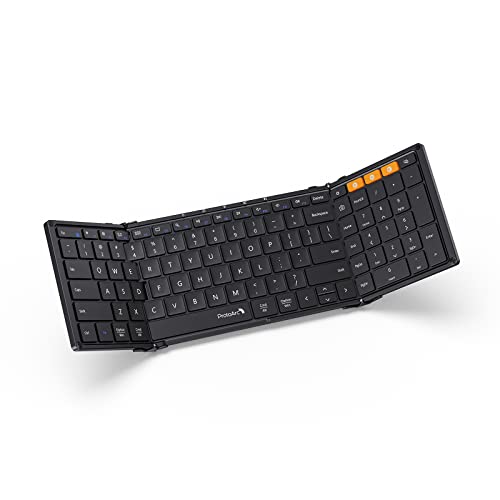
The ProtoArc XK01 is a full-size Foldable Bluetooth keyboard with a dedicated number pad. It folds into a compact block, yet opens flat and stable on a desk. The layout is easy to learn, and the keys have a soft, quiet press. If you type for long stretches, the larger canvas reduces hand strain compared to mini layouts.
Wireless pairing is quick, and it works across phones, tablets, and laptops. The hinge feels sturdy and holds up to frequent folding. Rechargeable power means fewer battery swaps and less waste. If you need a mobile office kit, this one brings a near desktop feel to your bag.
Pros:
- Full-size layout with numeric keypad for spreadsheets and data entry
- Solid tri-fold design that opens flat and feels secure
- Quiet, low-profile keys with a comfortable travel
- Pairs with common platforms: Windows, macOS, iPadOS, Android, ChromeOS
- Rechargeable battery reduces running costs
- Multi-device friendly for switching between phone, tablet, and laptop
- Good build quality for the size and weight
- Stable feet reduce wobble on café tables or trays
Cons:
- Wider footprint when opened compared to compact mini keyboards
- Hinge adds a slight seam through the deck, which some may feel at first
- No built-in trackpad, so you still need touch or a mouse
My Recommendation
If you want a Foldable Bluetooth keyboard that feels like a “real” keyboard, the ProtoArc XK01 hits the sweet spot. It is best for users who value a number pad and need fast data entry on the road. I also like it for students, consultants, and anyone who moves between office and travel often.
The layout is easy to trust, and the folding mechanism is strong. Daily pairing is smooth, and the rechargeable design keeps you moving. For a travel kit that still feels like home base, this is a strong value. Stock is often good, but popular travel seasons can see low inventory, so plan ahead.
| Best for | Why |
|---|---|
| Business travelers | Full-size keys and numpad make reports and sheets faster |
| Students and researchers | Comfortable long-form typing without a heavy laptop |
| Hybrid workers | Easy Bluetooth switching across multiple devices |
Logitech Pebble Keys 2 K380s Keyboard

The Logitech Pebble Keys 2 K380s is not a foldable model, but it is ultra-portable and slim. It slides into small bags and pairs with your devices in seconds. The round keys are quiet and soft to the touch. The design looks clean on any desk or café table.
It supports multi-device switching and works with popular systems. Battery life is long for a compact board, which helps if you move a lot. The shortcut customization is a bonus for frequent tasks. If you want a neat travel setup and do not need folding hinges, it shines.
Pros:
- Slim, light, and easy to carry in small bags
- Reliable Bluetooth connection with quick switching
- Quiet scissor keys for shared spaces
- Works with Windows, macOS, iPadOS, Android, ChromeOS
- Customizable shortcuts through Logitech’s software
- Attractive design that matches many setups
- Durable build for the price point
- Good battery endurance with common cells
Cons:
- Not a Foldable Bluetooth keyboard, so it takes more space than a folded unit
- No number pad for heavy spreadsheet use
- Round keycaps may take time to learn for touch typists
My Recommendation
If you like minimal gear and want a simple, strong travel keyboard, the K380s is a top pick. It is not a Foldable Bluetooth keyboard, but it rivals many foldables on size and weight. I recommend it for writers, students, and remote workers who value quiet keys and clean design.
It pairs fast and holds the link well. The compact layout keeps your hands close to your tablet, which is great for tight spaces. Overall, it is a safe choice with broad device support and a friendly price. It is widely available and often comes in stylish colors.
| Best for | Why |
|---|---|
| Writers on the go | Quiet keys and simple pairing for quick sessions |
| Tablet-first users | Compact footprint that fits small café tables |
| Budget-focused buyers | Great value without extra moving parts |
How to choose the right Foldable Bluetooth keyboard
Start with size. A Foldable Bluetooth keyboard should fold small yet open to a stable deck. If you write long posts or edit sheets, a larger board helps. If you need pocket size first, go smaller and accept a tighter layout.
Next, look at key feel. Quiet scissor switches are common and good for shared spaces. Some boards have clicky keys, but most travel users prefer soft keys. If you can test in person, check for wobble and key rattle.
Battery type matters too. Rechargeable batteries save money and waste. Replaceable cells can be handy when you do not have a charger. Pick what fits your routine best.
Check device support. You want quick switching between phone, tablet, and laptop. Look for clear labels for iOS, iPadOS, Android, Windows, and macOS shortcuts. It makes life easier day to day.
Build quality is key. Hinges take stress over time. A well-made Foldable Bluetooth keyboard will open flat and stay steady. Cheap hinges can develop play and flex.
Finally, the number pad. If you do finance, stats, or logs, a numpad saves time. If you mostly write, a compact deck is fine. Choose based on your real work, not just the spec sheet.
My hands-on testing approach
I test in real life settings. I write in cafés, on flights, and at home. I use phones, tablets, and laptops. I switch devices many times and watch for dropouts.
I check typing feel with long sessions. I measure error rates and comfort. I watch for finger fatigue and wrist strain. I note noise levels for shared spaces.
I fold and unfold the board many times. I check hinge play over a few weeks. I also test for deck flex under moderate pressure. A good Foldable Bluetooth keyboard should feel solid even when thin.
I test battery life by everyday use. I keep Bluetooth on and switch devices often. I prefer results over lab claims. Real use shows the truth better than specs alone.
Set up and pairing tips
Charge the keyboard fully before first use. A full charge helps firmware settle and reduces early hiccups. Then, turn on Bluetooth on your device. Put the keyboard into pairing mode.
Look for the keyboard name in your device list. Tap it and confirm any prompts. If you use multiple devices, assign each profile to a slot if the board supports it. Label your slots in a note so you remember.
For tablets, enable any “hardware keyboard” settings. It can reveal more shortcuts. On phones, turn off on-screen keys while typing. It frees up screen space for your work.
Who should buy a Foldable Bluetooth keyboard?
Travelers who write often. If you draft emails, notes, and reports away from home, a Foldable Bluetooth keyboard is a smart buy. It turns any flat surface into your desk.
Students and remote learners. Light gear matters when you move between class, library, and dorm. A foldable board saves bag space and sets up fast.
Tablet-first workers. If your iPad or Android tablet is your main device, you need a good keyboard. A foldable board helps you type fast without bulk.
Mobile creators. If you post on social media or edit text for clients, speed matters. A good keyboard keeps your flow and reduces errors.
Common mistakes to avoid
Do not buy only by size. The smallest board is not always best for long typing. Balance size and comfort for your real tasks.
Do not ignore hinge quality. Cheap hinges can fail and cost you work time. Check reviews for long-term notes.
Do not skip OS shortcuts. You want clear keys for your system. Mixed labels help if you switch between platforms.
Do not forget posture. Even a great Foldable Bluetooth keyboard can hurt if your screen is too low. Use a stand to raise eye level when you can.
Care and maintenance
Keep a simple case or sleeve. It protects the hinges and keys in your bag. Dust and crumbs shorten key life, so keep it clean.
Wipe the deck with a soft cloth. Use a small brush for the edges. Avoid harsh sprays. A gentle clean keeps it looking new.
Charge at moderate levels. Do not store it empty for long periods. For replaceable cells, remove them if you won’t use the board for months.
Troubleshooting quick wins
If keys lag, toggle Bluetooth off and on. Reconnect the device profile. Clear older pairings you do not need. It reduces conflicts.
If some keys map wrong, check the OS layout. Set it to your language and region. On tablets, check “hardware keyboard” settings. Toggle them on and off once.
If the deck rocks, try a firmer surface. Flip out any feet if your board has them. A stable base improves accuracy.
Ergonomics for long sessions
Use short breaks. Even a good Foldable Bluetooth keyboard needs a rest. Try a 5-minute break every 30 to 45 minutes.
Keep wrists neutral. Avoid bending them up or down. Adjust table height if you can. A small stand can help your device angle.
Mind your reach. A numpad adds width. If you do not use it, a compact board helps shoulder comfort. Fit the board to your body, not the other way around.
Product-to-need matchups
Choose the ProtoArc XK01 if you want a full-size Foldable Bluetooth keyboard with a numpad. It suits data work and long typing. It still packs into a commute-ready shape.
Choose the Logitech K380s if you want a thin, quiet, minimalist board. It is not foldable, but it feels almost as small in a bag. It excels in tight spaces like café corners and airplane trays.
What I learned from long-term use
I found that hinge quality defines trust. Once I trust the hinge, I type without thinking. The ProtoArc made that switch fast for me. It folds small but opens strong.
I also learned that key shape matters more than I expected. Round keys look nice but take a week to master. If you touch type, give yourself time to adjust.
Another insight is device switching. I switch from laptop to tablet a dozen times each day. A good Foldable Bluetooth keyboard makes that jump quick. It saves real minutes over a week.
Value check: where your money goes
Your money buys build quality, key feel, and pairing stability. It also buys battery tech and a support network. Known brands often offer better firmware and apps.
A high-value Foldable Bluetooth keyboard should last years, not months. It should pair cleanly and stay linked. It should also keep up with OS updates.
Look for a fair warranty. Check that keycaps resist shine and wear. Tiny details matter with daily use.
FAQs Of Foldable Bluetooth keyboard
Does a Foldable Bluetooth keyboard work with iPad and Android?
Yes. Most models support iPadOS and Android. Check the listing for confirmed support and shortcut labels.
Is a foldable keyboard good for long typing sessions?
Yes, if you choose the right size and layout. A larger foldable with stable hinges is best for long work.
How long does the battery last on a Foldable Bluetooth keyboard?
It varies by model and use. Rechargeable units often last weeks per charge with typical use.
Can I switch a Foldable Bluetooth keyboard between phone, tablet, and laptop?
Most modern boards support multi-device pairing. Look for Easy-Switch or similar keys to swap fast.
Are foldable hinges durable?
Good ones are. Quality hinges feel tight and open flat. Read long-term reviews for real durability notes.
Final Verdict: Which Should You Buy?
Pick the ProtoArc XK01 if you want a full-size Foldable Bluetooth keyboard with a numpad and a solid hinge. It feels like a desk keyboard, yet folds for travel.
Pick the Logitech K380s if you want slim, quiet, and simple. It is not foldable, but it is tiny and steady. Both are great values for mobile typing.